
Clear and healthy skin is a common skincare goal, but achieving it often involves trying new products, treatments, or routines. Sometimes, after introducing a new skincare product, people notice an increase in pimples or small bumps. This unexpected reaction can be confusing and frustrating. Many wonder whether their skin is simply adjusting to the product …

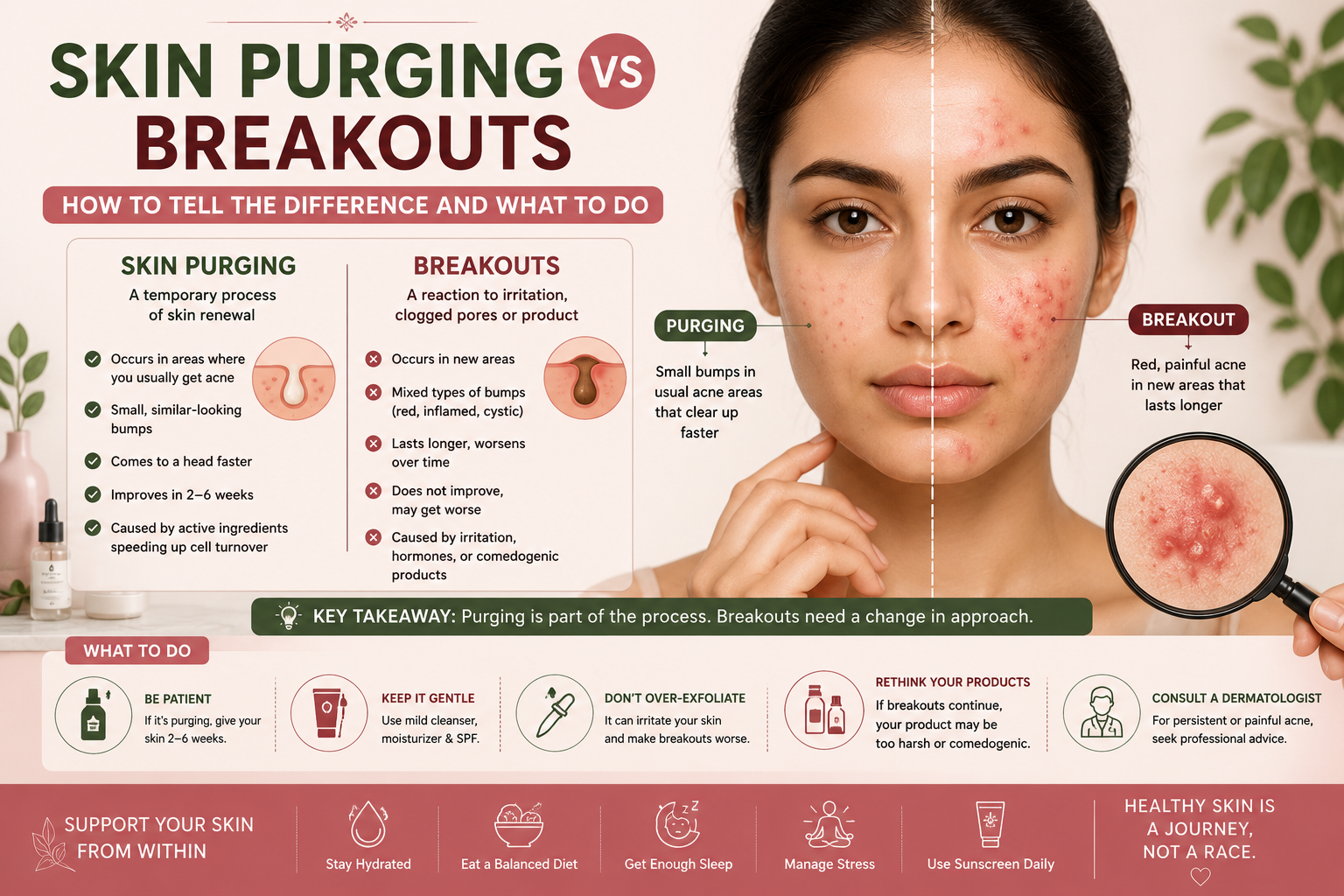

Clear and healthy skin is a common skincare goal, but achieving it often involves trying new products, treatments, or routines. Sometimes, after introducing a new skincare product, people notice an increase in pimples or small bumps. This unexpected reaction can be confusing and frustrating. Many wonder whether their skin is simply adjusting to the product or if it is reacting negatively.
Two terms that are frequently used in this situation are skin purging and breakouts. Although both conditions may appear similar at first, they are very different in terms of their causes, duration, and the way they should be managed. Mistaking one for the other may lead people to stop using an effective product too soon or continue using a product that is actually harming their skin.
Understanding the difference between skin purging and breakouts is essential for making informed skincare decisions. It can help prevent unnecessary product changes, reduce irritation, and ensure that skin concerns are managed appropriately.
What is Skin Purging?
Skin purging is a temporary reaction that may occur when certain skincare ingredients increase the rate of skin cell turnover. As the skin renews itself more quickly, clogged pores that were already developing beneath the surface come up faster, resulting in pimples, whiteheads, or blackheads appearing over a short period.
Although this can be discouraging, skin purging is generally considered a temporary phase rather than a sign that the product is damaging the skin. Once the skin completes this accelerated renewal cycle, many people notice improvements in texture, clarity, and overall appearance.
Not every skincare product causes purging. This reaction is typically associated with ingredients that promote exfoliation or stimulate faster skin renewal.
Which Ingredients Can Cause Skin Purging?
Certain active ingredients are more likely to trigger skin purging because they encourage the skin to shed old cells more rapidly.
Retinoids are among the most common ingredients associated with purging because they increase cell turnover and are frequently used in acne management and anti-aging routines.
Chemical exfoliants containing alpha hydroxy acids (AHAs) or beta hydroxy acids (BHAs), including glycolic acid, lactic acid, and salicylic acid, may also contribute to temporary purging in some individuals.
Prescription acne treatments, certain exfoliating serums, and products designed to improve skin texture may produce similar short-term effects.
Moisturizers, sunscreens, or gentle cleansers generally do not cause skin purging. If new acne develops after starting these products, another explanation should be considered.
What is a Breakout?
A breakout refers to the development of new acne caused by factors unrelated to accelerated skin renewal. Unlike skin purging, breakouts often occur because the skin is reacting negatively to a product or another underlying trigger.
Acne breakouts may develop due to clogged pores, excess oil production, hormonal changes, cosmetic ingredients that block pores, bacterial growth, stress, inadequate cleansing, or environmental factors.
Some individuals also experience breakouts because certain skincare products are too heavy for their skin type or contain ingredients that trigger irritation.
Unlike purging, breakouts usually continue as long as the underlying cause remains unaddressed.
How Can You Tell the Difference?
Although skin purging and acne breakouts may look similar, several important differences can help distinguish between them.
Timing is one of the biggest clues. Skin purging usually begins shortly after introducing an active skincare ingredient that increases cell turnover. Breakouts, however, may appear after using almost any product, particularly one that is not suitable for your skin type.
Location is another helpful indicator. Skin purging generally occurs in areas where acne commonly develops. If you usually experience breakouts on the forehead and cheeks, purging is more likely to appear in those same regions.
Breakouts caused by product irritation may appear in completely new areas where acne rarely occurs.
Duration also differs. Skin purging often improves as the skin completes its renewal cycle, whereas ordinary acne continues until the trigger is identified and removed.
How Long Does Skin Purging Last?
One of the most common questions people ask is how long skin purging should continue.
Although every person’s skin is different, purging generally lasts several weeks rather than several months. During this period, existing clogged pores surface more rapidly before gradually clearing.
If the reaction continues for an unusually long time, becomes increasingly severe, or is accompanied by significant redness, burning, swelling, or discomfort, the possibility of irritation or another skin condition should be considered instead.
Monitoring changes carefully during the first few weeks after introducing an active ingredient helps determine whether the skin is adjusting normally or reacting negatively.
Common Signs That You Are Experiencing a Breakout
Several warning signs suggest that new acne is more likely to represent a breakout than normal skin purging.
Large painful pimples appearing in unusual locations, increasing skin irritation, burning sensations, excessive redness, itching, or widespread inflammation often indicate that a product is not well tolerated.
Breakouts may also occur if multiple active ingredients are introduced simultaneously, making it difficult for the skin barrier to adapt.
Applying too many products at once can overwhelm the skin and increase the likelihood of irritation, particularly in individuals with sensitive skin.
Should You Continue Using the Product?
The answer depends on the type of reaction you are experiencing.
If the symptoms are consistent with mild skin purging and the product contains a well-known active ingredient such as a retinoid or chemical exfoliant, gradual introduction under appropriate guidance may allow the skin time to adjust.
However, if you develop severe irritation, painful inflammation, persistent burning, swelling, or acne in completely new areas, it is generally advisable to stop using the product and seek professional advice.
Continuing to use a product that is causing genuine irritation may further damage the skin barrier and prolong recovery.
Mistakes People Commonly Make
One of the biggest mistakes is changing skincare products too frequently. Many people switch products every few days after seeing new pimples, making it impossible to determine whether the skin is purging, breaking out, or simply adjusting to a new routine.
Another common mistake is introducing several active ingredients simultaneously. Starting retinoids, exfoliating acids, vitamin C, and multiple acne treatments together increases the likelihood of irritation and makes it difficult to identify which product is responsible for the reaction.
Over-cleansing, excessive exfoliation, and aggressive scrubbing may further weaken the skin barrier, increasing redness and sensitivity rather than improving acne.
How to Safely Introduce New Skincare Products
Introducing new skincare products gradually is one of the simplest ways to reduce the risk of irritation and confusion. Instead of replacing your entire skincare routine at once, introduce only one active product at a time and use it consistently for several weeks before adding another.
For ingredients such as retinoids or exfoliating acids, many dermatologists recommend starting with two or three applications per week rather than daily use. This gradual approach allows the skin barrier to adapt while minimizing dryness and irritation.
Applying a suitable moisturizer after active ingredients can also help maintain hydration and support the skin’s natural protective barrier. Daily use of a broad-spectrum sunscreen is equally important because many active skincare ingredients increase the skin’s sensitivity to sunlight.
Keeping the rest of your skincare routine simple while introducing new products makes it easier to identify how your skin is responding and whether any adjustments are necessary.
When Should You Consult a Dermatologist?
While mild purging may resolve on its own, there are situations where professional evaluation is important. If acne becomes increasingly painful, widespread, or leaves scars, medical advice should not be delayed.
Persistent breakouts lasting several weeks despite proper skincare may indicate hormonal acne, rosacea, fungal acne, allergic reactions, or other skin conditions that require different treatment approaches. Because many skin disorders appear similar, self-diagnosis can sometimes lead to incorrect treatment.
You should also seek medical attention if you experience severe redness, blistering, swelling, peeling, or burning after starting a skincare product. These symptoms are more consistent with irritation or an allergic reaction than normal skin purging.
Early diagnosis allows appropriate treatment to begin before permanent pigmentation changes or acne scars develop.
How Dermatologists Diagnose Persistent Acne
When acne continues despite home care, a dermatologist performs a detailed assessment rather than simply prescribing medication.
The consultation usually includes evaluation of your skin type, medical history, current skincare routine, previous treatments, lifestyle factors, hormonal influences, family history, and any medications you may be taking.
The dermatologist also examines the type of acne lesions present, including blackheads, whiteheads, inflammatory pimples, cysts, or nodules. This helps determine whether the condition represents acne vulgaris, rosacea, folliculitis, fungal acne, or another skin disorder.
Based on this evaluation, an individualized treatment plan may include topical medications, oral medicines, chemical peels, acne scar prevention strategies, or lifestyle recommendations depending on the severity of the condition.
A personalized approach often provides better long-term results than repeatedly trying over-the-counter products without understanding the underlying cause.
Tips to Prevent Future Breakouts
Although not every breakout can be prevented, healthy skincare habits significantly reduce the risk of recurring acne and skin irritation.
Wash your face twice daily using a gentle cleanser suitable for your skin type. Avoid harsh soaps or aggressive scrubbing, as these may damage the skin barrier and increase inflammation.
Choose non-comedogenic skincare and cosmetic products that are less likely to block pores. Remove makeup thoroughly before going to bed and avoid sleeping with cosmetic products on your skin overnight.
Try not to touch or squeeze pimples, as this increases the risk of bacterial spread, inflammation, post-inflammatory pigmentation, and permanent acne scars.
Maintaining a balanced diet, managing stress, getting adequate sleep, and staying hydrated also contribute to healthier skin. While lifestyle alone may not eliminate acne, these habits support overall skin health and complement appropriate medical treatment.
Why Self-Diagnosis Can Be Misleading
The internet has made skincare information easily accessible, but it has also increased confusion. Social media trends, viral videos, and personal testimonials often encourage people to diagnose their own skin conditions and follow treatments that may not be suitable for their skin.
Two people with similar-looking pimples may have completely different underlying conditions. One may be experiencing hormonal acne, while another has rosacea, allergic dermatitis, or folliculitis. Using the wrong treatment can delay improvement and sometimes worsen the condition.
Professional diagnosis is valuable because it focuses on identifying the actual cause rather than simply treating visible symptoms. This helps avoid unnecessary product purchases and repeated trial-and-error routines.
Healthy Skin Requires Patience
Many people expect visible improvement within a few days of starting a new skincare product. In reality, most scientifically proven treatments require several weeks before meaningful results become noticeable.
Frequently changing products, increasing application frequency too quickly, or combining multiple active ingredients often leads to additional irritation rather than faster improvement.
A consistent routine, realistic expectations, and patience usually produce better long-term outcomes than chasing instant results promoted online.
Understanding your skin and allowing treatments sufficient time to work is an important part of maintaining healthy skin.
Conclusion
Skin purging and acne breakouts may look similar, but they are very different conditions. Skin purging is generally a temporary response to ingredients that accelerate skin renewal, whereas breakouts often indicate clogged pores, irritation, unsuitable products, hormonal influences, or other underlying skin conditions.
Learning to recognize these differences helps prevent unnecessary changes to your skincare routine and reduces the risk of worsening skin problems. Introducing products gradually, protecting the skin barrier, and avoiding excessive experimentation are essential for maintaining healthy skin.
If acne becomes painful, persistent, leaves scars, or is accompanied by severe irritation, professional evaluation is the safest approach. Early diagnosis and appropriate treatment not only improve current skin concerns but also help maintain healthier skin in the long term.
Frequently Asked Questions (FAQs)
1. How long does skin purging usually last?
Skin purging typically lasts between four and six weeks, although the exact duration varies depending on individual skin renewal and the product being used.
2. Can every skincare product cause purging?
No. Purging is mainly associated with ingredients that increase skin cell turnover, such as retinoids and chemical exfoliants.
3. Should I stop using a product if my skin starts breaking out?
If you experience severe irritation, burning, swelling, or acne in new areas, discontinue the product and consult a dermatologist.
4. Can skin purging leave acne scars?
Mild purging usually does not cause scars. However, picking or squeezing pimples may increase the risk of permanent scarring and pigmentation.
5. When should I consult a dermatologist for acne?
You should seek professional advice if acne is persistent, painful, recurrent, causing scars, or not improving despite following a consistent skincare routine.


