
Hair thinning can gradually change the way your hair looks and feels. For some people, the first signs appear as a wider parting, reduced density around the crown or increased visibility of the scalp. When the underlying cause is identified early, a dermatologist can discuss suitable treatment options. PRP treatment is one option that may …

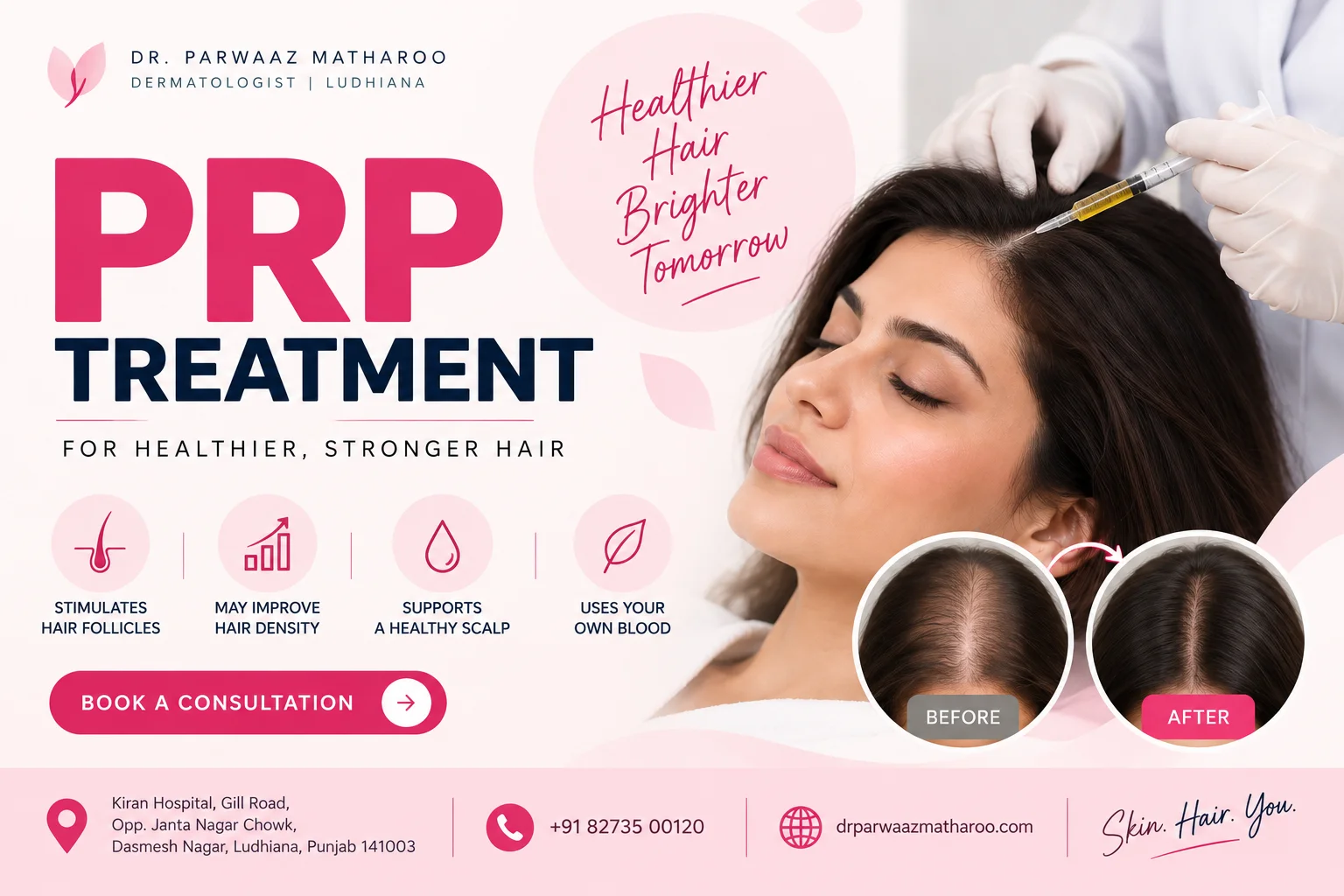
Hair thinning can gradually change the way your hair looks and feels. For some people, the first signs appear as a wider parting, reduced density around the crown or increased visibility of the scalp. When the underlying cause is identified early, a dermatologist can discuss suitable treatment options. PRP treatment is one option that may be considered for selected types of hair loss, particularly androgenetic alopecia.
PRP stands for Platelet-Rich Plasma. It is prepared from a small sample of the patient’s own blood and contains a concentrated amount of platelets and associated growth factors. Research has explored PRP as a treatment for androgenetic alopecia, although treatment protocols and results vary between studies.
What Is PRP Treatment for Hair Loss
PRP treatment uses a patient’s own blood to prepare platelet-rich plasma for injection into areas of the scalp affected by hair thinning.
The basic process involves collecting a small blood sample, processing it to separate the platelet-rich portion and carefully injecting the prepared plasma into selected areas of the scalp.
The purpose is to create a supportive environment around hair follicles. PRP contains growth factors involved in tissue repair and cellular activity, which is why it has been studied as a regenerative treatment for hair loss.
How Does PRP Treatment Work for Hair Growth
Hair follicles naturally move through different stages of the hair growth cycle. In androgenetic alopecia, susceptible follicles gradually become smaller and produce thinner hairs.
PRP is being studied for its potential effects on the follicular environment. Research suggests that platelet-derived growth factors may influence processes involved in follicle activity, blood vessel formation and cellular signaling.
This does not mean that PRP works in the same way for every person. The cause of hair loss, stage of thinning, follicle condition and overall treatment plan all influence the expected response.
Which Hair Loss Conditions May Be Considered for PRP
PRP has been studied most extensively in androgenetic alopecia, also called pattern hair loss.
It may be considered when a dermatologist identifies suitable hair follicles that can potentially respond to treatment. PRP is not automatically appropriate for every type of hair loss.
Hair shedding can also occur because of nutritional deficiencies, hormonal changes, thyroid problems, scalp disorders, medications, stress and other medical conditions. Identifying the cause is therefore an important first step. The American Academy of Dermatology also recommends dermatological assessment because different types of hair loss require different approaches.
Why Is Diagnosis Important Before PRP Treatment
Hair loss is a symptom rather than a single diagnosis.
Two people may notice similar thinning but have completely different reasons behind it. One person may have hereditary hair loss while another may have temporary shedding following illness or nutritional changes.
A dermatologist can assess the distribution of hair loss, scalp condition and medical history before deciding whether PRP belongs in the treatment plan.
What Happens During a PRP Hair Treatment Session
A PRP session generally begins with collecting a small amount of blood.
The sample is then processed to separate the plasma and concentrate the platelets. The prepared PRP is subsequently injected into selected areas of the scalp.
The American Academy of Dermatology describes the blood collection and scalp injection process as a relatively short procedure.
The exact technique, preparation method, injection pattern and treatment schedule can differ between clinics and patients.
How Long Does a PRP Session Take
The procedure itself can be relatively quick, although the complete appointment includes preparation and blood processing.
The American Academy of Dermatology notes that the injection portion can take around 10 minutes.
Your dermatologist can explain the expected appointment duration based on the technique being used.
How Many PRP Sessions Are Needed for Hair Growth
There is no single session schedule that applies to every patient.
Clinical recommendations and published studies have used different protocols. Indian Association of Dermatologists, Venereologists and Leprologists recommendations have described three to five PRP sessions at approximately one-month intervals for androgenetic alopecia.
However, the appropriate schedule depends on diagnosis, treatment response and the overall hair loss plan.
When Can You Expect Results From PRP Treatment
Hair growth takes time because follicles operate through a natural growth cycle.
Some patients may notice changes in shedding or hair thickness over the following months rather than immediately after treatment. The American Academy of Dermatology notes that some patients experience reduced hair loss within a few months, followed by possible thickening or regrowth.
Individual responses vary, so treatment should be evaluated over an appropriate period rather than judged immediately after one session.
Can PRP Treatment Make Thin Hair Look Fuller
PRP may help improve hair density or thickness in suitable patients with androgenetic alopecia.
Recent research reviews have reported improvements in measures such as hair density and thickness, while also highlighting differences between treatment protocols and the need for better standardisation.
The aim is therefore not simply to add volume temporarily. The treatment is intended to support the condition of existing hair follicles that remain capable of responding.
Can PRP Stop Hair Loss Completely
PRP should not be presented as a guaranteed way to stop all hair loss.
Pattern hair loss is a chronic condition, and management often requires a broader treatment strategy. PRP may be used as part of that strategy when appropriate.
A dermatologist can discuss whether PRP alone or a combination of treatments makes sense for the individual patient.
Can PRP Be Combined With Other Hair Loss Treatments
Yes, PRP may be considered alongside other treatments depending on the diagnosis.
Research has examined combinations involving PRP and topical minoxidil. A 2024 systematic review and meta-analysis found that adding PRP to topical minoxidil was associated with better hair-density outcomes than minoxidil alone, but the authors rated the certainty of evidence as low to very low because of limitations in the available studies.
This is why combination treatment should be personalised rather than applied as a fixed formula.
PRP Treatment and Minoxidil
Minoxidil remains an established treatment option for certain forms of pattern hair loss.
PRP works through a different approach, and research has explored whether combining the two may provide additional benefit. Current evidence is promising but not definitive, with differences in study quality and PRP preparation methods.
A dermatologist can determine whether a combination approach is appropriate.
PRP Treatment and Microneedling
Microneedling has also been studied as an adjunctive treatment for androgenetic alopecia.
Some research has examined combinations of PRP, minoxidil and microneedling. However, treatment protocols vary, so these approaches should be selected according to the patient’s diagnosis and scalp condition rather than following a standard combination for everyone.
Is PRP Treatment Suitable for Men and Women
PRP has been studied in both male and female pattern hair loss.
The important factor is not simply whether the patient is male or female. The dermatologist considers the pattern and cause of hair loss, the condition of the scalp and the presence of potentially treatable underlying factors.
Is PRP Made From Your Own Blood
Yes.
PRP is an autologous treatment, meaning the blood used to prepare the platelet-rich plasma comes from the same person receiving the treatment.
A small blood sample is processed to concentrate the platelet-rich portion before it is used on the scalp.
Does PRP Treatment Require Downtime
PRP is generally considered a minimally invasive procedure.
Temporary tenderness, redness or discomfort around injection sites can occur. Published reviews describe adverse effects as generally mild and transient, although individual experiences can differ.
Your dermatologist can provide specific aftercare instructions based on the procedure performed.
What Can You Expect After a PRP Session
The scalp may feel mildly tender for a short period after injections.
Patients are generally advised to follow the aftercare instructions provided by their treating dermatologist. The exact recommendations can depend on the injection technique, scalp condition and any other treatments being used.
Following the prescribed instructions helps support comfortable recovery.
Does PRP Treatment Work the Same for Everyone
No.
Hair loss is influenced by genetics, hormones, age, medical conditions, medications and other factors. PRP preparation methods also vary between studies, including differences in platelet concentration, processing and injection protocols.
These differences are one reason published outcomes are not identical across all studies.
What Does Current Research Say About PRP
Research on PRP for androgenetic alopecia has produced encouraging findings, particularly regarding hair density and thickness.
At the same time, researchers continue to highlight limitations such as small study populations, different preparation techniques and inconsistent treatment protocols. A 2026 review specifically identified protocol variation as an important reason for differences in reported outcomes.
Therefore, PRP can be considered a developing evidence-based treatment option rather than a guaranteed solution for every form of hair loss.
Is There Strong Evidence for PRP and Minoxidil Together
Evidence suggests a possible additional benefit when PRP is combined with topical minoxidil in androgenetic alopecia.
A 2024 systematic review and meta-analysis reported better hair-density outcomes with the combination, but also noted that several included studies had a high risk of bias and that the overall certainty of evidence was low to very low.
This distinction is important when discussing treatment expectations.
Why PRP Preparation Matters
PRP is not one identical product in every clinical setting.
Different preparation systems and processing methods can produce preparations with different platelet concentrations and compositions. Research has repeatedly identified this variation as an important limitation when comparing PRP studies.
A standardised and clinically appropriate preparation method is therefore an important part of treatment planning.
What Factors Influence PRP Treatment Results
Several factors can influence the response to treatment.
These include the type of hair loss, stage of the condition, follicle health, age, medical history, treatment protocol and whether PRP is combined with other therapies.
The condition of the scalp also matters. An underlying scalp disorder may require treatment before or alongside hair restoration therapy.
Why Early Hair Loss Evaluation Can Be Helpful
Early evaluation can help identify the cause of hair thinning before the condition progresses further.
For hereditary hair loss, early treatment may be particularly relevant because follicles can gradually become smaller over time. A dermatologist can identify the pattern and discuss suitable treatment options.
This does not mean every person with hair shedding needs PRP. It means the right diagnosis comes before choosing a procedure.
Can PRP Replace Hair Transplantation
PRP and hair transplantation serve different purposes.
A hair transplant involves moving hair follicles from one part of the scalp to another. PRP uses injections of platelet-rich plasma to support the scalp and existing follicles.
The American Academy of Dermatology notes that PRP can also be used alone or before a hair transplant in selected situations.
A dermatologist or hair restoration specialist can explain which approach fits the individual pattern of hair loss.
PRP Treatment Before Hair Transplantation
PRP may sometimes be incorporated into a broader hair restoration plan before or around transplantation.
The suitability depends on the patient’s hair loss pattern, donor area, scalp condition and treatment goals. It should be considered as one part of an overall plan rather than as a replacement for transplantation when transplantation is indicated.
What Should You Tell Your Dermatologist Before PRP
Before treatment, share relevant information about your medical history, medications, allergies and previous hair loss treatments.
Tell your dermatologist about any scalp symptoms, recent illness, significant changes in hair shedding and treatments you are currently using.
This information helps the dermatologist understand the complete picture before recommending a procedure.
Who Should Assess Your Hair Loss
A dermatologist is trained to diagnose and manage diseases affecting the skin, hair and nails.
A proper assessment can distinguish pattern hair loss from conditions that require different treatment. This is particularly important when hair loss is sudden, patchy or accompanied by scalp changes.
Why a Personalised PRP Plan Matters
A personalised plan allows treatment to match the actual cause and pattern of hair loss.
The dermatologist can determine whether PRP is appropriate, whether another treatment should be started first and whether combination treatment may be useful.
This approach also helps create realistic expectations about the timeline and possible response.
PRP Treatment for Hair Loss in Ludhiana
People looking for PRP treatment in Ludhiana can benefit from choosing care that begins with diagnosis rather than simply selecting a procedure.
Dr. Parwaaz Matharoo, M.D. Dermatology, provides dermatological evaluation and personalised treatment guidance for hair and scalp concerns. As a dermatologist in Ludhiana, she can assess the cause and pattern of hair loss before discussing suitable options such as PRP or other medical treatments.
How to Maintain Hair Health Alongside Treatment
Hair treatment works best as part of an overall approach to scalp and hair health.
A balanced diet, gentle hair care, appropriate management of scalp conditions and following prescribed treatments can all form part of a personalised hair care plan.
Avoiding unnecessary treatments and choosing products according to your scalp and hair type can also help maintain a healthy routine.
When Should You Consult a Dermatologist for Hair Loss
Consider a dermatology consultation if you notice persistent thinning, increasing hair shedding, a widening parting, reduced density or visible scalp.
A consultation is especially useful when hair loss develops suddenly, appears in patches or occurs along with scalp symptoms.
Identifying the cause helps determine which treatment options are relevant.
Frequently Asked Questions About PRP Treatment
Is PRP treatment painful
PRP involves multiple small scalp injections, so some patients may experience discomfort during the procedure. Your dermatologist can discuss ways to make the session more comfortable.
How many PRP sessions are required
The number of sessions depends on the diagnosis and treatment plan. Published recommendations for androgenetic alopecia commonly describe multiple sessions rather than a single treatment.
How soon does PRP show results
Hair changes generally take time. Some patients may notice reduced shedding or changes in thickness over the following months.
Can PRP regrow completely bald areas
PRP is generally considered for suitable hair follicles rather than as a guaranteed method for restoring completely bald areas. The condition of the follicles is important when determining suitability.
Can women take PRP treatment for hair loss
PRP has been studied in women as well as men, particularly for pattern hair loss. The cause of hair loss determines whether it is appropriate.
Can PRP be used with minoxidil
PRP can be combined with minoxidil in selected treatment plans. Research suggests a potential additional benefit, although the certainty of evidence remains limited.
Is PRP a permanent treatment
PRP should not be described as a permanent cure for pattern hair loss. Long-term management may require continued medical treatment depending on the underlying condition.
Is PRP suitable for every type of hair loss
No. PRP has been studied mainly for conditions such as androgenetic alopecia. Other forms of hair loss require their own diagnostic evaluation and treatment.
Can PRP improve hair thickness
Studies have reported improvements in hair thickness and density in some patients with androgenetic alopecia. Individual responses vary.
Can PRP be combined with other procedures
Yes, depending on the diagnosis. Research has evaluated combinations involving minoxidil and microneedling, among other approaches.
Final Thoughts on PRP Treatment for Hair Growth
PRP treatment is an established area of dermatological research for hair loss, particularly androgenetic alopecia. It uses the patient’s own blood to prepare platelet-rich plasma, which is then injected into selected areas of the scalp.
Current evidence suggests potential improvements in hair density and thickness for suitable patients, while also showing that outcomes can vary because treatment protocols are not yet fully standardised.
The most important step is to identify the cause of hair loss before choosing treatment. A personalised assessment by a dermatologist can help determine whether PRP, medication, combination therapy or another approach is appropriate.
Dr. Parwaaz Matharoo, M.D. Dermatology, provides personalised dermatology care for hair and scalp concerns in Ludhiana.
Book an Appointment
It’s easy and free!


