
Hair fall is common, but persistent shedding or visible thinning deserves more attention than simply changing your shampoo. Hair loss can happen because of hereditary factors, illness, nutritional deficiencies, hormonal changes, scalp conditions, medications, or physical stress. Different causes need different approaches. A dermatologist in Ludhiana can examine your scalp, understand your pattern of hair …

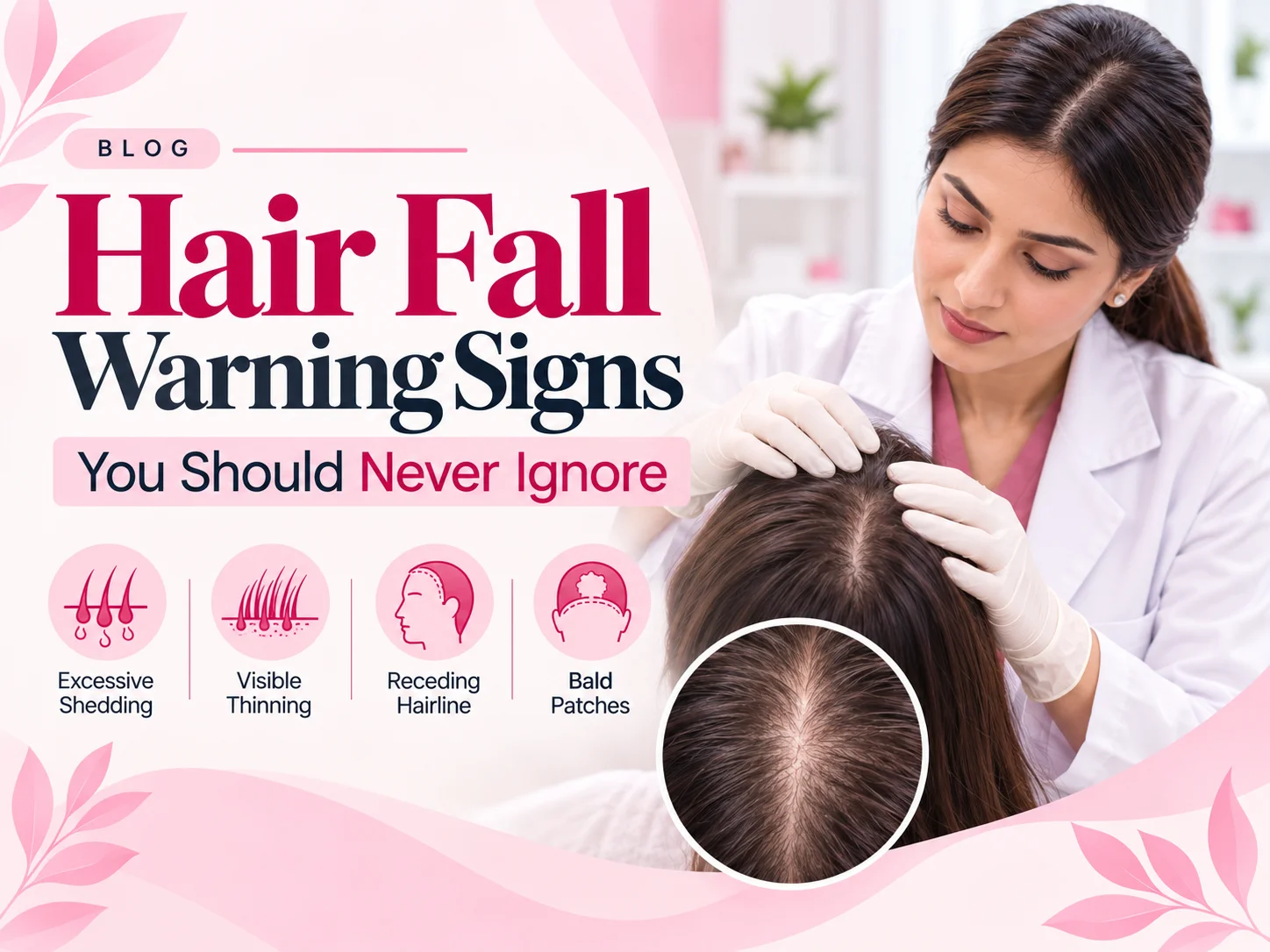
Hair fall is common, but persistent shedding or visible thinning deserves more attention than simply changing your shampoo. Hair loss can happen because of hereditary factors, illness, nutritional deficiencies, hormonal changes, scalp conditions, medications, or physical stress. Different causes need different approaches. A dermatologist in Ludhiana can examine your scalp, understand your pattern of hair loss, identify possible causes, and decide whether treatment is needed. If you are searching for a skin specialist in Ludhiana because your hair fall is becoming difficult to manage, the first step is understanding what is actually causing it.
Is some hair fall normal
Yes. Hair naturally goes through cycles of growth and shedding.
The American Academy of Dermatology notes that losing around 50 to 100 hairs a day can be normal. More noticeable concerns include a receding hairline, a bald patch, widening of the part, or overall thinning.
The pattern matters more than simply counting hairs.
For example, someone may notice more hair on their pillow after a stressful period, while another person may gradually develop thinning around the crown. These situations can have very different causes.
What can cause hair fall
Hair loss does not have one single cause.
Some common possibilities include
- Hereditary or pattern hair loss
- Excessive shedding after illness or physical stress
- Nutritional deficiencies
- Hormonal changes
- Certain medications
- Scalp infections
- Alopecia areata
- Tight hairstyles that repeatedly pull on the hair
- Hair damage and breakage
- Inflammatory scalp conditions
The American Academy of Dermatology explains that identifying the underlying cause is an important part of managing hair loss because different types of hair loss require different treatment approaches.
That is why treating hair fall based only on advertisements or social media recommendations may not address the actual problem.
When should you see a dermatologist for hair fall
You should consider a dermatology consultation if you notice persistent or progressive changes in your hair.
Some signs that deserve attention include
Your hair is becoming visibly thinner
If your scalp is becoming more visible or your hair part is gradually widening, it may be worth getting the cause assessed.
You notice a receding hairline
A changing hairline can be associated with pattern hair loss. Early assessment can help determine whether treatment may be useful.
You develop a bald patch
A clearly defined patch of hair loss can have several causes, including alopecia areata. A dermatologist can examine the area and determine what may be happening.
Your hair fall starts suddenly
Sudden or significant shedding can sometimes follow illness, surgery, major weight loss, childbirth, or other physical stress. It can also have other causes, so persistent shedding should be assessed rather than assumed to be temporary.
You also have scalp symptoms
Itching, scaling, redness, pain, crusting, or inflammation along with hair loss can point toward a scalp condition that may need medical treatment.
Your hair fall continues despite home care
If changing shampoos, oils, supplements, or hair care habits has not helped, it may be time to move from trial and error to proper assessment.
How does a dermatologist diagnose hair loss
A consultation is not simply about looking at the amount of hair you have.
A dermatologist usually starts by understanding your history.
You may be asked about
- When the hair fall started
- Whether it appeared suddenly or gradually
- Family history of hair loss
- Recent illness or major stress
- Weight changes
- Diet and nutritional concerns
- Hormonal changes
- Current medications
- Hair care and styling habits
- Previous treatments
The scalp and hair are then examined for clues about the type and pattern of hair loss.
Depending on what the dermatologist finds, additional tests may sometimes be recommended. The AAD notes that blood tests or a scalp biopsy may be considered when a medical condition, nutritional deficiency, hormonal issue, infection, or another cause is suspected.
This is one reason an individualised assessment matters.
Why the right diagnosis matters before hair fall treatment
Two people can have similar-looking hair thinning but completely different underlying causes.
One person may have hereditary hair loss. Another may be experiencing temporary shedding after an illness. Someone else may have a scalp disorder or alopecia areata.
The treatment plan can therefore be very different.
The AAD specifically notes that no single hair loss treatment works for everyone. Treatment depends on the type and cause of hair loss and the individual circumstances of the patient.
A good consultation should therefore focus on why the hair is falling, not simply on selling a particular procedure.
What hair fall treatments may a dermatologist recommend
Treatment depends on the diagnosis.
Depending on the condition, a dermatologist may consider topical treatments, prescription medicines, procedures, scalp care, nutritional correction, or a combination of approaches.
Topical treatments
Some types of hereditary hair loss may respond to topical minoxidil.
The AAD notes that minoxidil can help stimulate hair growth and reduce further hair loss in some people, but it does not work for every cause and results take time. Continued use is generally needed to maintain its benefits.
A dermatologist can help determine whether it is appropriate for your particular situation.
Prescription medicines
Certain types of hair loss may be treated with prescription medication.
The choice depends on factors such as the cause of hair loss, age, overall health, and other individual considerations. Some medicines also have important precautions, so they should not be started simply because they worked for someone else.
PRP for selected hair loss cases
Platelet-rich plasma, commonly called PRP, is another treatment used for certain types of hair loss.
PRP involves drawing a small amount of blood, processing it to obtain the platelet-rich portion, and injecting it into selected areas of the scalp.
The AAD describes PRP as a treatment option that may help some people with hair loss, usually as part of a planned series of treatments rather than a single session.
Whether PRP is appropriate depends on the diagnosis and the condition of the scalp and hair follicles.
Treatment for scalp conditions
If hair loss is connected with an infection, inflammation, or another scalp condition, treating that underlying problem may be an important part of the plan.
This is another reason why a dermatologist consultation can be more useful than choosing a hair treatment based only on the symptom of hair fall.
Can hair fall be treated at home
Some basic hair care habits can help reduce avoidable hair damage.
Avoid repeatedly pulling the hair into very tight hairstyles. Be gentle when brushing wet hair and avoid excessive heat or chemical processing when these are contributing to breakage.
However, home care cannot diagnose the cause of progressive hair loss.
The AAD also cautions against taking supplements simply because they are marketed for hair growth. Some nutrients can be harmful in excessive amounts, and supplements are most appropriate when a deficiency has actually been identified.
Should you choose a dermatologist or a hair clinic
If you are experiencing unexplained or persistent hair loss, a dermatologist can assess both the hair and scalp and look for medical causes.
This is particularly useful when hair loss is accompanied by scalp changes, sudden shedding, patches of hair loss, or other symptoms.
When searching for a dermatologist near me, look beyond advertisements. Consider the doctor’s dermatology qualifications, experience with hair and scalp conditions, approach to diagnosis, and whether the treatment plan is based on your individual condition.
How to choose the best dermatologist in Ludhiana for hair fall
People often search for the best dermatologist in Ludhiana when they are worried about hair loss.
Instead of relying only on a ranking or promotional claim, look for practical signs of trustworthy care.
Check dermatology qualifications
A qualified dermatologist has specific medical training in conditions affecting the skin, hair, and nails.
Look for experience with hair and scalp conditions
Hair loss can have many causes. Experience in diagnosing different patterns can be useful when deciding on an appropriate treatment plan.
Understand the diagnosis first
A good consultation should explain what may be causing the hair loss and why a particular treatment is being considered.
Be cautious about guaranteed results
Hair growth varies between individuals. No responsible treatment plan should promise identical results for everyone.
Look for personalised treatment
The right treatment depends on the diagnosis, the severity of hair loss, medical history, and individual needs.
These factors are more useful when choosing a skin specialist in Ludhiana than relying on a simple “top” or “best” label.
What makes Dr. Parwaaz Matharoo relevant for dermatology care in Ludhiana
Dr. Parwaaz Matharoo is a dermatologist practising in Ludhiana with qualifications listed as MBBS and MD in Dermatology, Venereology and Leprosy. Cloudnine also lists her clinical dermatology expertise and her work with conditions including psoriasis and vitiligo.
For someone looking for a dermatologist in Ludhiana, a consultation can help determine whether ongoing hair fall is related to pattern hair loss, excessive shedding, a scalp condition, or another underlying factor.
The focus should be on identifying the cause first and then choosing treatment according to the individual’s condition.
Visit Dr. Parwaaz Matharoo’s website
What should you expect during a hair fall consultation
A hair fall consultation should be a conversation as well as an examination.
You may discuss when the problem began, how quickly it changed, previous treatments, family history, lifestyle factors, and any recent health changes.
The dermatologist then examines the scalp and hair to look for signs that can help identify the type of hair loss.
If further investigation is needed, the doctor may recommend appropriate tests.
Once the likely cause is understood, the treatment options can be discussed along with realistic expectations.
This approach is more useful than starting multiple treatments at the same time without knowing which problem you are actually treating.
How long does hair fall treatment take to show results
Hair growth is a gradual process.
Some treatments require several months before changes become noticeable. The timeline also depends on the type of hair loss, how early treatment begins, and how well the individual responds.
For example, the AAD notes that minoxidil may take several months before noticeable improvement appears.
This means photographs and clinical follow-up can sometimes be more useful than checking the mirror every day.
A dermatologist can also explain what type of improvement is realistic for your specific condition.
Frequently asked questions
Is hair fall always a sign of baldness
No. Temporary shedding can happen after illness, surgery, major stress, significant weight loss, childbirth, and other situations. Progressive thinning or bald patches need a different assessment.
How much hair fall is normal
The AAD notes that losing around 50 to 100 hairs per day can be normal. Noticeable thinning, bald patches, or a changing hairline are more important signs to evaluate.
Should I see a dermatologist for hair fall
If hair loss is persistent, progressive, sudden, patchy, or associated with scalp symptoms, a dermatology consultation can help identify the cause.
Can a dermatologist treat hair loss
Dermatologists diagnose and treat many types of hair loss. Treatment depends on the cause and may include topical treatments, medicines, procedures, or treatment of an underlying condition.
Is PRP suitable for everyone with hair loss
No. PRP may be considered for selected types of hair loss, but it is not appropriate for every person or every cause. A dermatologist should first assess the type of hair loss.
Should I take hair supplements for hair fall
Not automatically. Supplements can be useful when a deficiency is identified, but taking unnecessary or excessive amounts of certain nutrients can cause problems.
Can hair loss grow back
Some types of hair loss can improve or regrow, while others may require long-term management. The outcome depends heavily on the underlying cause and how early it is addressed.
How do I find a dermatologist near me in Ludhiana
Look for a qualified dermatologist with relevant experience, transparent treatment discussions, and an approach that starts with diagnosis rather than automatically recommending one procedure.
The main takeaway
Persistent hair fall is not something you need to diagnose on your own.
Hair shedding can have many causes, and the right treatment depends on understanding what is happening at the scalp and hair follicle level. If you are noticing progressive thinning, bald patches, a changing hairline, or ongoing shedding, consulting a dermatologist in Ludhiana can help you understand the next step.
For people searching for a skin specialist in Ludhiana, dermatologist near me, best dermatologist in Ludhiana, or best skin doctor in Ludhiana, the most useful starting point is not a ranking. It is a proper dermatology assessment and a treatment plan based on your individual condition.
Book an Appointment
It’s easy and free!


