Uneven skin tone, pigmentation, acne marks, dullness and rough skin texture can make the skin look tired even when you follow a regular skincare routine. Creams and daily skincare can help maintain the skin, but some concerns may need professional dermatological treatment. Chemical peel treatment is one option dermatologists may use for selected skin concerns. …

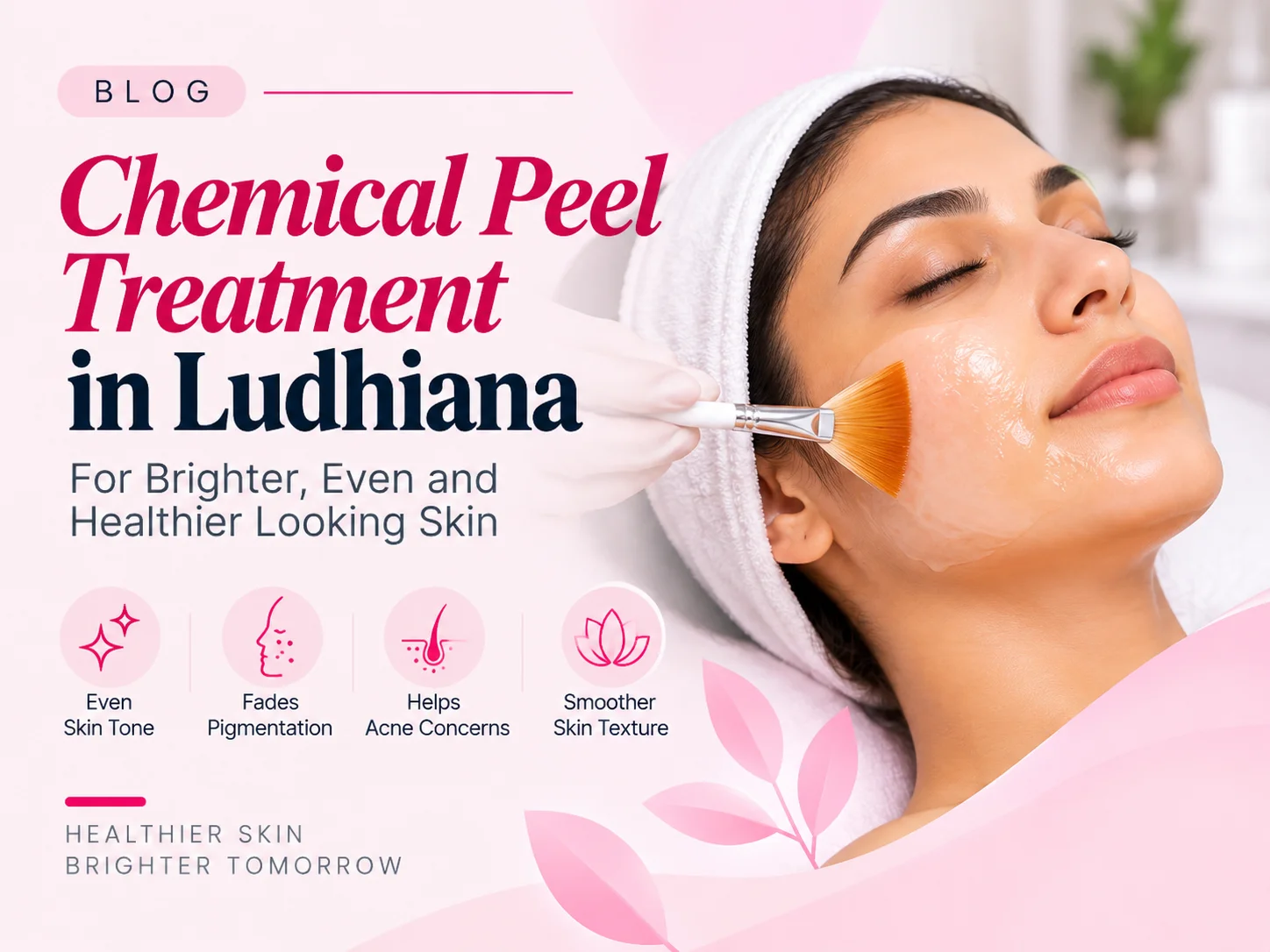
Uneven skin tone, pigmentation, acne marks, dullness and rough skin texture can make the skin look tired even when you follow a regular skincare routine. Creams and daily skincare can help maintain the skin, but some concerns may need professional dermatological treatment.
Chemical peel treatment is one option dermatologists may use for selected skin concerns. The treatment involves applying a carefully selected chemical solution to the skin to exfoliate targeted layers and encourage the skin to renew itself.
If you are considering chemical peel treatment in Ludhiana, it is important to understand that a chemical peel is not simply a stronger version of an exfoliating product. The type, concentration and application method need to be selected according to your skin condition, skin type and treatment goal.
The American Academy of Dermatology notes that dermatologists use chemical peels for concerns such as certain types of acne, discoloration, melasma, dull complexion, fine lines, rough skin and sun damage.
What Is a Chemical Peel
A chemical peel is a dermatological procedure in which a chemical solution is applied to the skin to produce controlled exfoliation.
Depending on the formulation and depth of the peel, the treatment can work at different levels of the skin. Dermatologists select the appropriate peel according to the concern being treated and the patient’s individual skin characteristics.
A peel may be considered for concerns such as
- Uneven skin tone
- Certain types of acne
- Pigmentation
- Melasma
- Dull skin
- Sun damage
- Rough skin texture
- Some acne scars
- Fine lines
The objective is not simply to remove the outer layer of skin. The treatment needs to be planned according to the condition being addressed.
How Can Chemical Peel Treatment Help Pigmentation
Pigmentation can develop for different reasons. Sun exposure, hormonal changes, acne inflammation and certain skin conditions can all contribute to uneven pigmentation.
A chemical peel may help improve the appearance of some forms of discoloration by promoting controlled exfoliation and skin renewal.
However, pigmentation treatment requires proper diagnosis. Melasma, post-inflammatory pigmentation and other pigmentation disorders may look similar but can require different approaches.
For this reason, a dermatologist should evaluate the skin before recommending a peel.
The AAD notes that chemical peels may be used for certain types of discoloration and melasma, but treatment should be selected according to the individual patient.
Can Chemical Peels Help Acne
Chemical peels may be included in treatment plans for selected acne concerns.
According to the AAD, chemical peels can help remove dead skin cells and excess oil that contribute to clogged pores. However, they are not automatically the right treatment for every type of acne.
Active acne can have different causes and levels of severity. Hormonal acne, inflammatory acne and acne associated with other medical factors may require medical treatment alongside or instead of procedures.
A dermatologist can determine whether a chemical peel is appropriate and whether it should be combined with another treatment.
Chemical Peels for Acne Marks and Uneven Texture
Acne can leave behind more than active breakouts. Some people develop dark marks while others develop changes in skin texture or depressed scars.
A chemical peel may be considered as part of a treatment plan for selected acne scars and pigmentation.
The AAD explains that chemical peels may be used for depressed acne scars and that multiple treatments may sometimes be needed depending on the type and depth of the scar.
It is important to distinguish between an acne mark and an acne scar.
A dark mark represents a change in pigmentation. A depressed acne scar involves a change in skin structure. Because these concerns are different, the treatment approach can also be different.
What Happens During a Chemical Peel
A professional chemical peel usually begins with a consultation.
The dermatologist assesses your skin and discusses your main concern. Your skincare products, medications, previous procedures and history of sensitivity may also be relevant.
The skin is then prepared before the selected peel is applied.
The exact procedure depends on the type of peel being used. Some superficial peels may involve relatively little downtime, while deeper treatments can require a longer recovery period.
The AAD notes that some patients may need pre-peel skincare for two to four weeks before treatment. Recovery time also varies depending on the depth of the peel.
How Many Chemical Peel Sessions Are Needed
There is no universal number of sessions.
The required treatment schedule depends on the concern, the type of peel, the patient’s skin response and the treatment objective.
For some concerns, dermatologists may recommend a series of superficial or medium peels rather than one aggressive procedure.
The AAD notes that mild peels may require several sessions, sometimes spaced a few weeks apart.
A dermatologist should decide the treatment interval rather than following a fixed schedule found online.
Is Chemical Peel Treatment Safe for Indian Skin
Chemical peels can be performed safely on darker skin tones when the procedure is appropriately selected and performed by a trained professional.
However, pigmentation changes can be an important consideration.
The AAD specifically advises people with skin of color to choose a dermatologist experienced in performing chemical peels on darker skin tones because inappropriate treatment can increase the risk of pigment problems.
This is particularly relevant for patients who already experience pigmentation after acne, irritation or minor skin injuries.
What Should You Avoid Before a Chemical Peel
Your dermatologist may provide specific preparation instructions.
You may need to discuss
- Prescription medicines
- Retinoids
- Acne medicines
- Previous cosmetic procedures
- History of cold sores
- Skin sensitivity
- Previous scarring
- Current skincare products
The AAD recommends discussing medications, supplements, previous treatments and relevant medical history before a chemical peel.
Following preparation instructions can help reduce avoidable irritation and support a smoother recovery.
Chemical Peel Aftercare
Aftercare is an important part of the treatment.
Your dermatologist may recommend a gentle skincare routine and appropriate sun protection while the skin recovers.
Do not pick, peel or scratch the treated skin.
Avoid adding strong active ingredients to your routine unless your dermatologist recommends them.
Sun protection is especially important because treated skin can be more sensitive and pigmentation can worsen with sun exposure.
The AAD also warns that poor aftercare, sun exposure and picking the treated skin can increase the risk of complications.
Who May Benefit From Chemical Peel Treatment
Chemical peel treatment may be considered for people concerned about
- Uneven skin tone
- Certain pigmentation concerns
- Dull skin
- Rough texture
- Selected acne concerns
- Some acne marks
- Sun-related skin changes
- Fine lines
However, a consultation is important before treatment.
A peel that works well for one person may not be appropriate for another.
Why Dermatologist Supervision Matters
Chemical peels are medical procedures and should not be treated like ordinary skincare products.
At-home high-strength chemical peels can cause burns, pigmentation changes and other complications when used incorrectly.
The AAD advises that chemical peels should be performed under the supervision of a licensed and trained professional such as a dermatologist.
A dermatologist can determine whether a peel is suitable, select an appropriate formulation and provide preparation and aftercare guidance.
Choosing Chemical Peel Treatment in Ludhiana
If you are searching for chemical peel treatment in Ludhiana, look beyond the treatment name.
Consider whether the consultation includes a proper assessment of your skin and whether the provider explains the expected benefits, limitations, downtime and possible side effects.
You should also understand whether the treatment is intended for pigmentation, acne, texture or another concern.
An experienced dermatologist in Ludhiana can assess your skin and decide whether a chemical peel or another dermatological treatment is more suitable.
Chemical Peel Treatment at Dr. Parwaaz Matharoo
Dr. Parwaaz Matharoo provides dermatology care for medical and aesthetic skin concerns in Ludhiana. Her clinical approach focuses on understanding the patient’s concern before selecting an appropriate treatment.
For patients considering chemical peel treatment, the consultation can help determine whether the procedure is suitable for their skin type, concern and treatment goals.
The treatment plan can then be personalized according to the individual’s needs rather than following a fixed procedure for everyone.
Frequently Asked Questions
Is a chemical peel good for pigmentation
Chemical peels can help with selected forms of pigmentation and uneven skin tone. The cause of pigmentation should be identified before treatment.
Can chemical peels help acne
Certain chemical peels can be used as part of an acne treatment plan, but they are not suitable for every type of acne.
How many chemical peels are needed
The number of treatments depends on the skin concern, peel type and individual response.
Can people with darker skin have chemical peels
Yes, but treatment should be carefully selected because some skin types have a higher risk of post-treatment pigmentation.
Should I see a dermatologist before a chemical peel
Yes. A professional skin assessment helps determine whether a chemical peel is appropriate and which approach is safest for your skin.
Conclusion
Chemical peel treatment can be a useful dermatological option for selected concerns such as pigmentation, acne, uneven tone, dullness and rough texture.
The key is choosing the right peel for the right concern and using appropriate preparation and aftercare.
If you are considering chemical peel treatment in Ludhiana, a consultation with a qualified dermatologist can help you understand whether the treatment is suitable for your skin and what alternatives may be available.
Book an Appointment
It’s easy and free!


