
A skin problem can sometimes be easy to identify, but many conditions can look similar on the surface. Acne, pigmentation, rashes, itching, scalp scaling and hair loss may have several possible causes. This is why a proper dermatology consultation focuses on understanding the condition before deciding on treatment. A skin check-up is not only about …

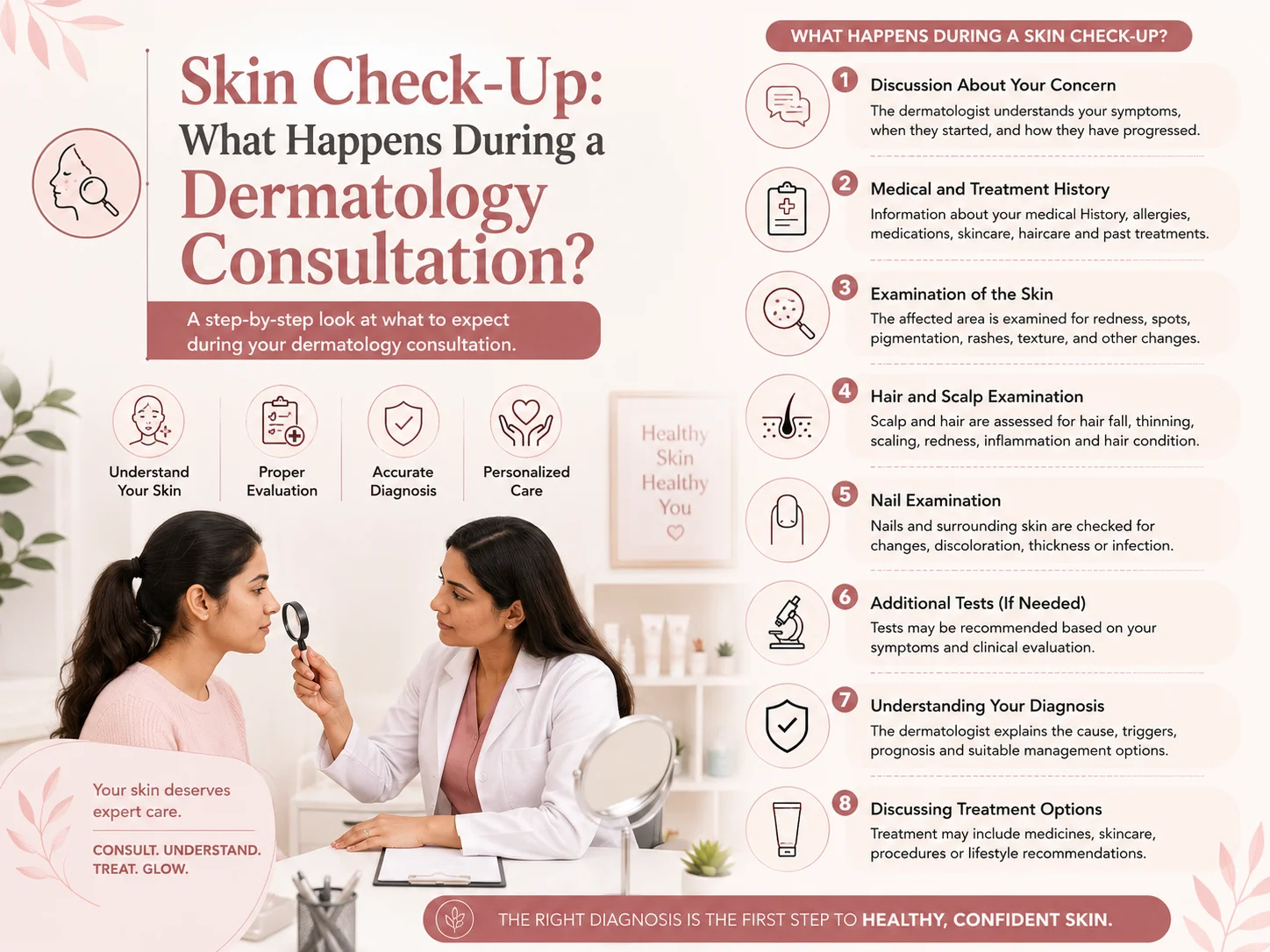
A skin problem can sometimes be easy to identify, but many conditions can look similar on the surface. Acne, pigmentation, rashes, itching, scalp scaling and hair loss may have several possible causes. This is why a proper dermatology consultation focuses on understanding the condition before deciding on treatment.
A skin check-up is not only about looking for visible skin problems. It can involve discussing your symptoms, medical history, skincare routine and previous treatments, followed by an examination of the affected area.
If you are planning to visit a dermatologist in Ludhiana, knowing what happens during a consultation can help you prepare and make the appointment more useful.
What Is a Dermatology Consultation?
A dermatology consultation is an appointment where a dermatologist evaluates concerns involving the:
- Skin
- Hair
- Scalp
- Nails
Depending on the concern, the dermatologist may assess symptoms, examine the affected area and recommend further investigations if necessary.
The purpose is to understand the condition and determine an appropriate treatment approach rather than simply treating a visible symptom.
What Happens During a Skin Check-Up?
A typical consultation can involve several steps.
1. Discussion About Your Main Concern
The consultation usually begins with understanding why you have visited.
You may be asked:
- When did the problem begin?
- Has it changed over time?
- Is it getting better or worse?
- Is there itching, burning or pain?
- Has the problem occurred before?
- Have you used any treatments already?
Try to describe your symptoms as accurately as possible. Even small details can sometimes help the dermatologist understand the pattern of a condition.
2. Medical and Treatment History
Your dermatologist may ask about your medical history and any medications you are currently taking.
You may also be asked about:
- Previous skin conditions
- Allergies
- Previous procedures
- Current medications
- Skincare products
- Haircare products
- Previous dermatology treatments
- Relevant family history
If you have used prescription creams, antibiotics, acne medicines or other dermatological treatments previously, it is useful to mention them.
3. Examination of the Skin
The dermatologist will examine the area affected by your concern.
Depending on the problem, this may include looking at:
- Skin colour and texture
- Redness
- Pigmentation
- Lesions or spots
- Scaling
- Swelling
- Acne
- Scarring
- Rashes
- Changes in moles or growths
The distribution and appearance of a skin problem can provide important clues about its possible cause.
4. Hair and Scalp Examination
If your concern involves hair fall, thinning, dandruff or scalp irritation, the scalp and hair will also be examined.
The dermatologist may assess:
- Hair density
- Pattern of hair loss
- Scalp scaling
- Redness
- Inflammation
- Visible scalp changes
- Hair shaft condition
Hair loss can have several causes, so identifying the pattern can be an important part of the evaluation.
5. Nail Examination
Nails can also provide clues about certain dermatological conditions.
If you have nail discoloration, thickening, brittleness, separation or repeated infections, the dermatologist may examine the nails and surrounding skin.
Persistent nail changes should not always be assumed to be a fungal infection because different conditions can sometimes produce similar changes.
6. Additional Tests May Be Recommended
Not every skin concern requires testing.
However, depending on your symptoms and clinical examination, a dermatologist may recommend additional investigations to help confirm a diagnosis.
The type of test depends entirely on the suspected condition.
The important point is that testing should be based on the clinical situation rather than being necessary for every patient.
7. Understanding Your Diagnosis
Once the evaluation is complete, your dermatologist can explain what may be causing the problem.
This is an important part of the consultation because understanding the diagnosis can help you understand:
- Why the condition developed
- What may be triggering it
- Whether it can recur
- What treatment options are available
- What changes may help manage it
For conditions that require ongoing care, the dermatologist may also explain what to expect over the coming weeks or months.
8. Discussing Treatment Options
Treatment depends on the diagnosis.
Depending on the condition, dermatological treatment may include:
- Prescription medicines
- Topical treatments
- Medicated skincare
- Oral medicines
- Chemical peels
- Laser-based treatments
- Injectable treatments
- Other dermatological procedures
Not every treatment is suitable for every patient.
A dermatologist considers factors such as the condition, severity, skin type, medical history and previous treatment response before recommending an approach.
What Should You Tell Your Dermatologist?
The more accurate information you provide, the easier it can be to understand your concern.
Before your appointment, think about:
When did the problem start?
Knowing whether it began recently or has been present for months or years can be useful.
What treatments have you already tried?
Mention prescription medicines, over-the-counter products, home remedies and procedures.
What products are you currently using?
Bring or make a list of your skincare and haircare products if possible.
Has anything made the condition better or worse?
Changes in weather, diet, products, medications or lifestyle may sometimes be relevant.
Do other family members have similar concerns?
Family history can be relevant for some skin and hair conditions.
Should You Stop Using Your Skincare Before a Consultation?
There is no universal rule that everyone should stop their skincare products before seeing a dermatologist.
Some products may be important for understanding your current routine, while certain treatments may need to be paused before specific procedures.
Instead of making changes on your own, tell the dermatologist exactly what you are currently using and follow their instructions regarding any changes.
Can You Get a Skin Check-Up Without Having a Major Skin Problem?
A dermatology consultation does not have to be limited to severe skin disease.
People may seek professional advice for concerns such as:
- Early signs of skin aging
- Pigmentation
- Uneven skin tone
- Acne
- Acne marks
- Hair thinning
- Scalp problems
- Skin texture
- Persistent dryness
- Cosmetic skin concerns
The appropriate assessment depends on the person’s individual concern and medical history.
How Often Should You Have a Skin Check-Up?
There is no single schedule that applies to everyone.
The frequency of dermatology visits depends on factors such as:
- Existing skin conditions
- Previous skin problems
- Treatment being received
- Response to treatment
- Personal risk factors
- The dermatologist’s recommendation
Some people may need only an occasional consultation, while others with chronic conditions may require regular follow-up.
When Should You Not Delay a Dermatology Consultation?
Consider seeking professional evaluation when a skin, hair or scalp problem is:
- Persistent
- Repeatedly returning
- Getting worse
- Painful
- Very itchy
- Spreading
- Causing noticeable hair loss
- Leaving scars
- Changing in appearance
- Not improving with basic care
A new or changing skin growth should also be evaluated by an appropriate medical professional.
How to Prepare for Your Dermatology Appointment
A little preparation can make your consultation more productive.
Before visiting a dermatologist in Ludhiana, you can:
Make a list of your current medicines
Include prescription and non-prescription products.
Write down your skincare routine
Mention cleansers, moisturizers, sunscreens, serums and treatment products.
Take photographs if the condition changes
This can be particularly useful when symptoms come and go.
Note previous treatments
Mention what you tried and how your skin responded.
Prepare your questions
Write down anything you want to understand about your condition or treatment.
What Makes a Good Dermatology Consultation?
A useful consultation should give you clarity rather than simply a list of products or procedures.
You should ideally understand:
What is causing the concern?
What treatment options are available?
Why has a particular treatment been recommended?
What should you expect from the treatment?
What follow-up may be needed?
Clear communication between the patient and dermatologist is an important part of ongoing skin care.
Frequently Asked Questions
What is included in a skin check-up?
A skin check-up generally involves discussing your symptoms and medical history followed by an examination of the relevant skin, hair, scalp or nail concern. Further evaluation may be recommended when required.
Should I see a dermatologist for a small skin problem?
Not every minor skin issue requires a consultation. However, if the problem persists, returns frequently, worsens or is difficult to identify, professional evaluation may be helpful.
Can a dermatologist diagnose hair loss?
A dermatologist can evaluate hair loss by examining the scalp and hair pattern and reviewing relevant medical history. Additional tests may sometimes be recommended.
Do dermatologists treat pigmentation?
Yes. Dermatologists can evaluate different types of pigmentation and determine suitable treatment based on the underlying cause.
How should I prepare for a dermatology consultation?
Keep information about your medications, skincare products, previous treatments and symptom history ready. You can also note any questions you want to discuss during the appointment.
Can I consult a dermatologist for aesthetic concerns?
Yes. Dermatologists may also evaluate aesthetic concerns such as pigmentation, acne scars, skin texture, fine lines and other skin-related concerns. The suitability of any procedure depends on individual assessment.
Conclusion
A skin check-up is about more than examining the surface of your skin. A dermatology consultation allows your doctor to understand your symptoms, medical history and previous treatments before determining an appropriate way to manage the concern.
Whether you are dealing with acne, pigmentation, hair loss, scalp problems, rashes or another persistent skin concern, the right diagnosis is an important starting point.
Dr. Parwaaz Matharoo, Board-Certified Dermatologist and trusted dermatologist in Ludhiana, provides personalized dermatological evaluation and treatment for a wide range of skin, hair and aesthetic concerns.
Book an Appointment
It’s easy and free!


