Unwanted facial or body hair is a common concern, and many people look for a longer-lasting alternative to frequent shaving, waxing or other temporary hair-removal methods. Laser hair removal is a dermatological procedure that uses concentrated light energy to target hair follicles. With repeated treatments, it can reduce hair growth over time. The results can …

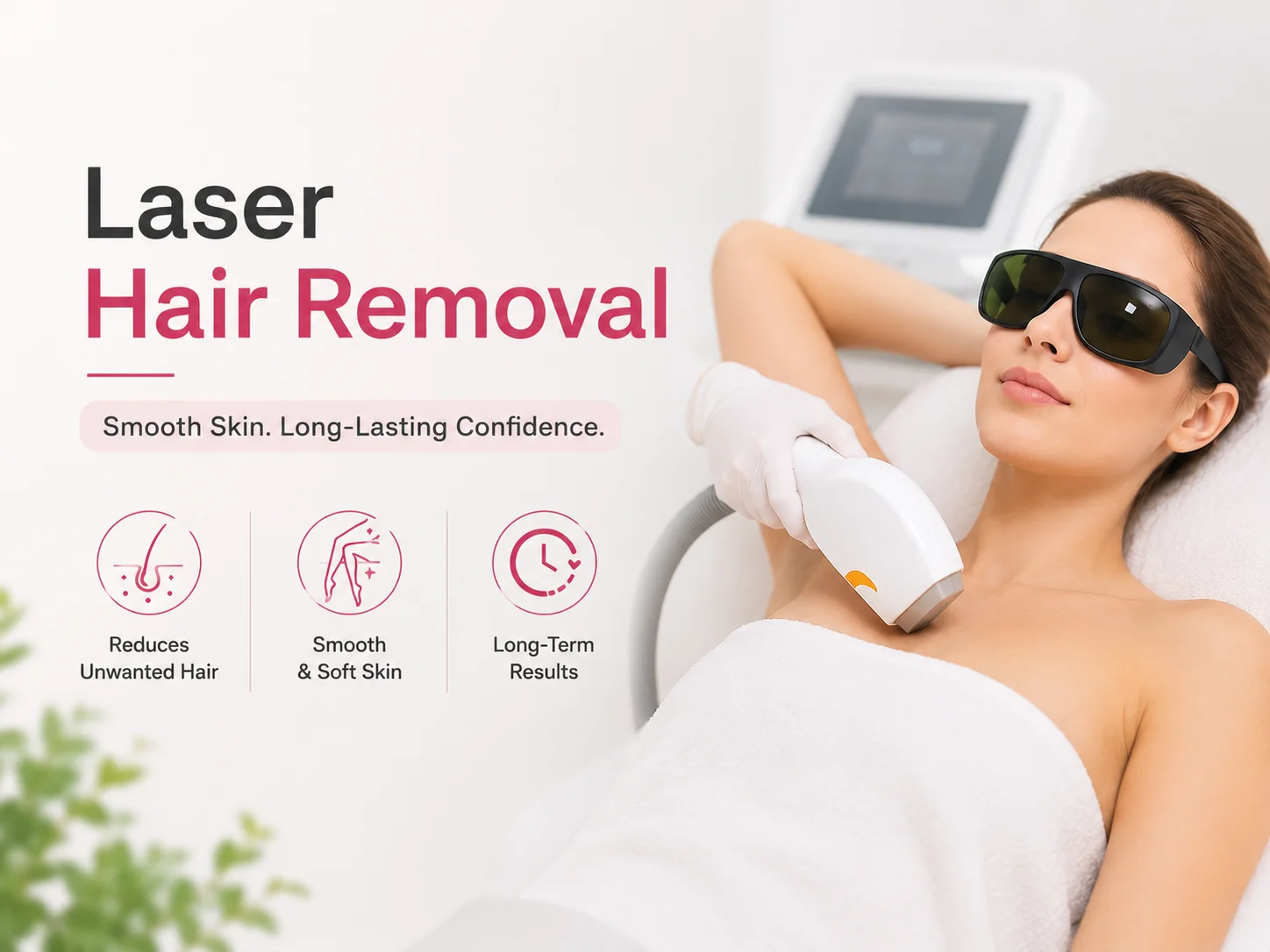
Unwanted facial or body hair is a common concern, and many people look for a longer-lasting alternative to frequent shaving, waxing or other temporary hair-removal methods.
Laser hair removal is a dermatological procedure that uses concentrated light energy to target hair follicles. With repeated treatments, it can reduce hair growth over time.
The results can vary depending on factors such as hair colour, skin tone, hair thickness, hormonal influences and the area being treated. Because these factors affect treatment response, proper assessment before starting laser hair removal is important.
A dermatologist in Ludhiana can evaluate your skin and hair characteristics and help determine whether laser hair removal is suitable for you.
What Is Laser Hair Removal?
Laser hair removal uses light energy that is absorbed by pigment in the hair.
The energy is converted into heat, which targets the hair follicle and can reduce its ability to produce new hair.
Because hair follicles are at different stages of the growth cycle at any given time, multiple sessions are generally required rather than a single treatment.
The goal is usually long-term hair reduction, not a guarantee that every hair will permanently disappear.
How Does Laser Hair Removal Work?
Hair grows through different phases.
Laser treatment works most effectively on hairs in a particular stage of the growth cycle because the hair contains enough pigment to absorb the laser energy and transfer heat toward the follicle.
At any one time, not all hairs are in the same stage.
This is why treatments are spaced apart and repeated over a period of time.
With each suitable session, some of the actively growing hairs can be targeted. Over successive sessions, many patients experience a noticeable reduction in hair growth.
Which Areas Can Be Treated?
Laser hair removal can be used on many areas of the body, depending on the individual’s skin and hair characteristics.
Common treatment areas include:
- Upper lip
- Chin
- Face
- Underarms
- Arms
- Legs
- Back
- Chest
- Bikini area
The suitability of treatment depends on the individual area, hair type and skin characteristics.
How Many Laser Hair Removal Sessions Are Needed?
There is no fixed number of sessions that works for everyone.
The number can depend on:
- Hair thickness
- Hair colour
- Skin tone
- Treatment area
- Hormonal factors
- Hair growth cycle
- Response to previous sessions
Some people may notice a reduction in hair growth after the first few treatments, while a series of sessions is generally needed for more significant reduction.
Maintenance sessions may also be recommended for some individuals.
Is Laser Hair Removal Permanent?
It is more accurate to describe the expected outcome as long-term hair reduction rather than guaranteed permanent hair removal.
Many people experience substantially reduced hair growth after completing an appropriate treatment course.
However, some hair can regrow over time.
Regrowth may be influenced by:
- Hormonal changes
- Genetics
- Underlying medical conditions
- Individual hair-growth patterns
Maintenance treatment may be useful in selected cases.
Is Laser Hair Removal Safe?
Laser hair removal is generally considered safe when the appropriate technology, settings and technique are selected for the individual’s skin and hair characteristics.
Temporary effects can occur after treatment, such as:
- Mild redness
- Slight swelling around hair follicles
- Temporary sensitivity
- Mild warmth or discomfort
These effects generally settle after treatment.
More significant reactions can occur if treatment is unsuitable or performed with inappropriate settings, which is why professional assessment is important.
Does Laser Hair Removal Hurt?
The sensation varies between individuals and treatment areas.
Some people describe the treatment as a series of quick snapping or warming sensations.
The level of discomfort can depend on:
- Treatment area
- Hair thickness
- Hair density
- Individual sensitivity
- Laser technology
- Treatment settings
Some devices incorporate cooling mechanisms to improve comfort during treatment.
Is Laser Hair Removal Suitable for Every Skin Tone?
Laser technology has developed significantly, and different systems may be suitable for different skin types.
However, the choice of laser and treatment settings matters.
People with darker skin may have a higher risk of pigment-related side effects if inappropriate settings or technology are used.
A proper skin assessment helps the dermatologist select a suitable approach.
What About Very Light or Grey Hair?
Laser hair removal generally works by targeting pigment within the hair.
As a result, very light, grey or white hairs may respond less effectively because they contain less melanin for the laser to target.
Hair colour is therefore an important factor when assessing expected results.
Can Laser Hair Removal Treat Facial Hair?
Yes, facial areas such as the upper lip and chin can be treated.
However, facial hair can sometimes behave differently from body hair, particularly when hormonal factors influence growth.
Some individuals may therefore require more sessions or maintenance treatment.
If facial hair growth is sudden, excessive or associated with other hormonal symptoms, a medical evaluation may also be appropriate.
What Should You Do Before Laser Hair Removal?
Your dermatologist or treatment provider may provide specific preparation instructions.
Common recommendations may include:
Avoid Waxing or Plucking
Waxing and plucking remove the hair from the follicle, which can interfere with the laser’s target.
Shave When Advised
You may be asked to shave the treatment area before your appointment.
Avoid Excessive Sun Exposure
Recently tanned skin may increase the risk of certain treatment-related side effects.
Inform Your Provider About Medications
Tell your dermatologist about medicines and skincare products you are using.
Do not stop prescribed medication without medical advice.
What Should You Avoid After Laser Hair Removal?
After treatment, the skin may be temporarily sensitive.
Depending on the treatment area and your provider’s instructions, you may be advised to:
- Avoid excessive sun exposure
- Use appropriate sunscreen on exposed areas
- Avoid aggressive scrubbing
- Avoid irritating skincare products temporarily
- Avoid unnecessary heat exposure if the skin feels sensitive
- Follow the specific aftercare instructions provided
The exact aftercare can vary according to the laser used and the area treated.
Can You Wax Between Laser Sessions?
Waxing and plucking are generally avoided during a laser hair-removal course because they remove the hair from the follicle.
Shaving is usually preferred when hair needs to be removed between sessions.
Follow the specific instructions provided by your dermatologist.
Can Laser Hair Removal Cause Darkening?
Pigment changes are possible after laser treatment, particularly when treatment is performed on recently tanned skin or with unsuitable settings.
People with darker skin tones may require particularly careful selection of treatment parameters.
Temporary darkening or lightening can occur in some cases.
A professional assessment before treatment can help reduce unnecessary risks.
Laser Hair Removal vs Waxing: What’s the Difference?
| Laser Hair Removal | Waxing |
| Provides long-term reduction in hair growth | Removes hair temporarily |
| Requires multiple sessions | Requires repeated appointments |
| Targets the hair follicle | Removes hair from the skin and follicle mechanically |
| Results develop over multiple sessions | Results are visible immediately |
| Suitable candidates may need maintenance sessions | Hair usually grows back as part of the normal cycle |
Laser hair removal and waxing serve different purposes. The right option depends on your preferences, hair growth and long-term goals.
Can Laser Hair Removal Help With Ingrown Hair?
Repeated shaving or waxing can contribute to ingrown hairs in some individuals.
Because laser treatment can reduce hair growth over time, it may also help reduce the frequency of ingrown hairs for some people.
However, existing ingrown hairs may require separate treatment depending on their severity.
What If Hair Growth Is Caused by Hormonal Changes?
Hormonal factors can influence hair growth, particularly on the face.
If facial hair growth is unusually rapid or accompanied by other symptoms, simply treating the hair may not address the underlying cause.
A dermatologist can assess the pattern and determine whether further medical evaluation may be appropriate.
Laser treatment may still be considered as part of hair management, depending on the individual situation.
When Should You Consult a Dermatologist?
Consider a dermatology consultation before laser hair removal if:
- You have very sensitive skin
- You have a history of pigmentation after procedures
- Your skin is recently tanned
- You have an active skin condition in the treatment area
- Facial hair growth has increased suddenly
- You are taking medications that may affect your skin
- You are unsure which laser technology is appropriate
A professional assessment can help determine whether laser hair removal is suitable and what results you may reasonably expect.
Frequently Asked Questions
How long do laser hair removal results last?
Many people experience long-term reduction in hair growth after completing a treatment course. Some regrowth can occur, and maintenance sessions may be needed.
How many sessions are needed for laser hair removal?
The number varies depending on the treatment area, hair characteristics, skin tone, hormonal factors and individual response.
Can I shave between laser sessions?
Shaving is generally preferred over waxing or plucking during a laser treatment course because it does not remove the hair from the follicle.
Is laser hair removal safe for the face?
Facial laser hair removal can be performed in suitable candidates, but the treatment settings and technology should be selected according to the individual’s skin and hair characteristics.
Does laser hair removal permanently remove hair?
Laser treatment is better described as long-term hair reduction. Some regrowth can occur and maintenance sessions may be required.
Can laser hair removal work on grey hair?
Because laser energy targets pigment in the hair, grey and white hairs generally respond poorly compared with darker hairs.
Conclusion
Laser hair removal can provide a longer-lasting alternative to repeated shaving and waxing by targeting hair follicles during suitable stages of the hair-growth cycle.
The number of sessions, results and treatment response vary from person to person. Hair colour, skin tone, treatment area, hormonal factors and the choice of laser technology can all influence the outcome.
For safe and appropriate treatment planning, Dr. Parwaaz Matharoo, Board-Certified Dermatologist and trusted dermatologist in Ludhiana, can assess your skin and hair characteristics and guide you regarding suitable laser hair-removal options and aftercare
Book an Appointment
It’s easy and free!


