
Pigmentation can improve significantly with the right treatment, but many people notice that dark patches or uneven skin tone gradually return after some time. This can be frustrating, especially when you have already invested time and effort into improving your skin. However, recurrence does not necessarily mean that the treatment failed. Pigmentation is often influenced …

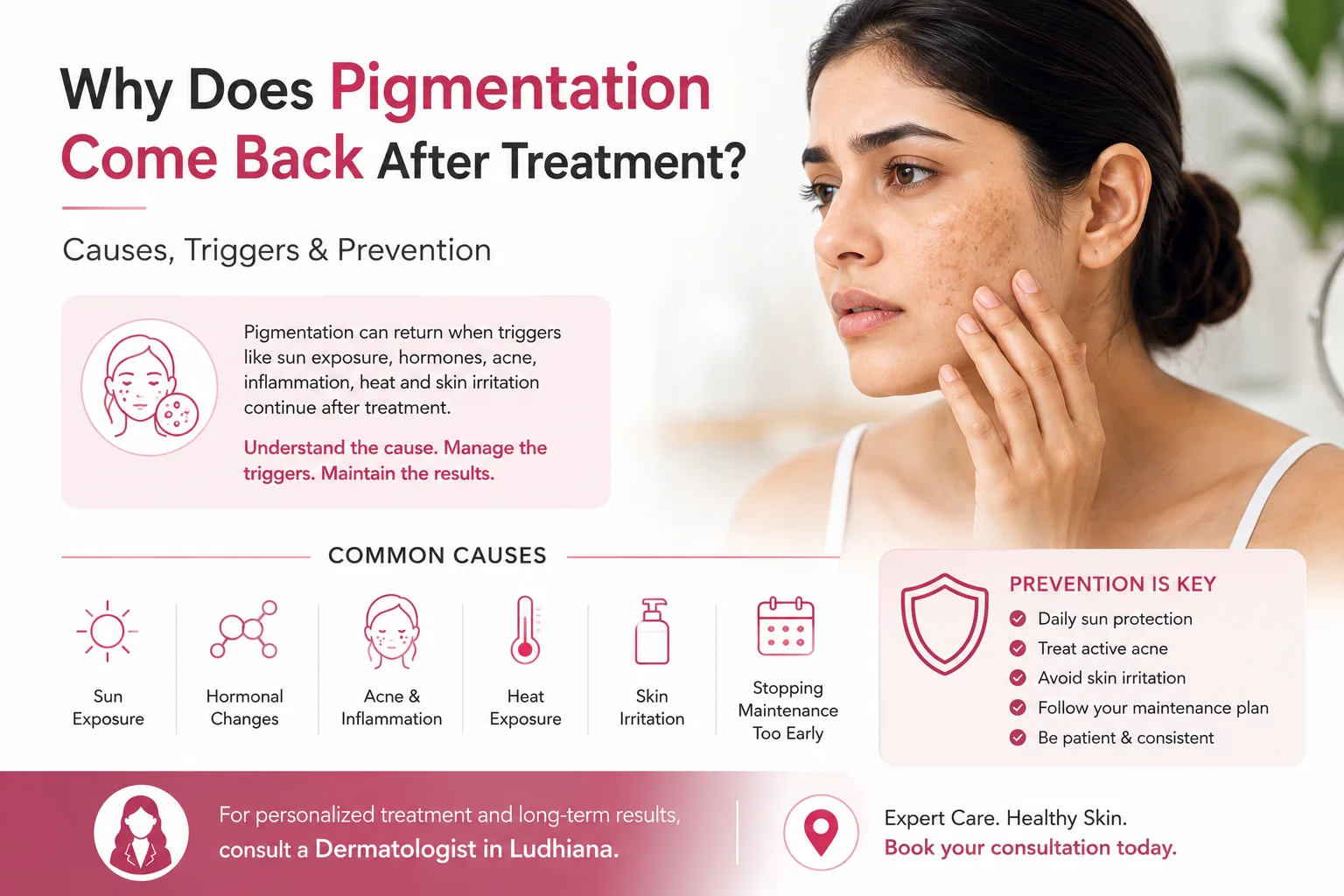
Pigmentation can improve significantly with the right treatment, but many people notice that dark patches or uneven skin tone gradually return after some time.
This can be frustrating, especially when you have already invested time and effort into improving your skin. However, recurrence does not necessarily mean that the treatment failed.
Pigmentation is often influenced by several factors, including sun exposure, hormonal changes, inflammation, heat and the underlying type of pigmentation. If these triggers continue after treatment, the skin may produce excess pigment again.
Understanding why pigmentation comes back after treatment is therefore an important part of achieving longer-lasting improvement.
If you are experiencing recurring pigmentation, a dermatologist in Ludhiana can assess the underlying cause and help develop a treatment and maintenance plan suited to your skin.
Why Does Pigmentation Come Back After Treatment?
Pigmentation is not always a one-time skin concern. Treatment can reduce existing excess pigment, but it may not permanently remove the factors responsible for producing it.
Here are some common reasons pigmentation can return.
Continued Sun Exposure
Sun exposure is one of the most important reasons pigmentation can become darker again.
Ultraviolet radiation can stimulate melanocytes, the cells responsible for producing melanin.
Even after pigmentation improves, regular exposure to sunlight without adequate protection can encourage new pigment production.
This is particularly important for conditions such as melasma and post-inflammatory pigmentation.
What can help?
Make sun protection a consistent part of your daily routine.
Depending on your lifestyle, this may include:
- Broad-spectrum sunscreen
- Reapplication when appropriate
- Hats or other physical protection
- Avoiding prolonged direct sunlight
- Seeking shade when outdoors
Sunscreen is not only useful after pigmentation treatment. It is an important part of maintaining the results.
The Underlying Cause Has Not Been Addressed
Pigmentation is a visible change in the skin, but it can have different underlying causes.
For example, pigmentation may be associated with:
- Melasma
- Acne
- Skin inflammation
- Sun exposure
- Skin irritation
- Certain medications
- Hormonal changes
If treatment only targets the visible pigmentation while the underlying trigger continues, recurrence may be more likely.
This is why identifying the type of pigmentation before choosing treatment is important.
Hormonal Changes
Some types of pigmentation, particularly melasma, can be influenced by hormonal factors.
Changes associated with pregnancy, certain hormonal medications or other hormonal fluctuations may contribute to the appearance or worsening of pigmentation.
In these situations, pigmentation may fluctuate even when a person is following a good skincare routine.
Hormonal factors are only one possible contributor, so persistent pigmentation should be assessed rather than automatically attributed to hormones.
Heat Can Aggravate Pigmentation
For some individuals, prolonged exposure to heat may make pigmentation more noticeable.
This can be relevant for people who already have melasma or are prone to facial pigmentation.
Heat exposure can occur through:
- Prolonged outdoor activities
- Hot environments
- Certain occupational settings
- Repeated exposure to high temperatures
If you notice that your pigmentation becomes darker during periods of increased heat or outdoor exposure, mention this during your dermatology consultation.
Acne Can Cause New Pigmentation
You may successfully treat existing pigmentation but continue developing new dark marks because active acne is still present.
When acne causes inflammation, the skin may develop post-inflammatory hyperpigmentation after the pimple heals.
This can create the impression that the original pigmentation has returned.
In reality, some of the new marks may be caused by new episodes of inflammation.
Managing both concerns matters
If acne and pigmentation occur together, treating only the dark marks may not be enough.
Managing active acne can help reduce the development of additional pigmentation.
Skin Irritation Can Make Pigmentation Worse
Harsh skincare products, excessive exfoliation and aggressive procedures can irritate the skin.
Inflammation caused by irritation can sometimes trigger additional pigmentation.
Common mistakes include:
- Using too many active ingredients
- Excessive exfoliation
- Scrubbing the skin
- Using unsuitable home remedies
- Frequently changing skincare products
- Combining multiple strong treatments without professional guidance
A simple, consistent routine is often preferable to repeatedly exposing the skin to unnecessary irritation.
Stopping Maintenance Treatment Too Early
Some pigmentation concerns require ongoing maintenance even after visible improvement.
A dermatologist may recommend a maintenance skincare routine after the initial treatment phase.
Stopping everything as soon as the pigmentation becomes lighter may allow the underlying tendency to return.
Maintenance does not necessarily mean continuing intensive treatment indefinitely. The approach may be adjusted according to your skin’s response.
Choosing the Wrong Treatment for the Type of Pigmentation
Not every dark patch should be treated in the same way.
For example, melasma, acne-related pigmentation and sun spots have different characteristics and may respond differently to treatment.
Using an inappropriate procedure or product may provide limited improvement or cause irritation.
This is why professional skin assessment is particularly important before starting chemical peels, lasers or other pigmentation procedures.
Can Laser Treatment Make Pigmentation Come Back?
Laser and light-based treatments can be useful for selected pigmentation concerns, but results depend on the type of pigmentation, skin type, treatment settings and aftercare.
Pigmentation may return if the underlying triggers remain.
In some individuals, excessive irritation or inappropriate treatment can also cause post-inflammatory pigmentation.
This does not mean laser treatments should be avoided altogether. It means the procedure should be selected carefully and performed according to the specific skin concern.
Can Chemical Peels Prevent Pigmentation From Returning?
Chemical peels can help improve certain types of pigmentation and uneven skin tone.
However, a peel does not permanently remove the tendency to develop pigmentation.
If triggers such as sun exposure, acne or inflammation continue, pigmentation can develop again.
A long-term approach usually combines professional treatment with appropriate skincare and sun protection.
How Can You Reduce the Chance of Pigmentation Returning?
Long-term management is often as important as the initial treatment.
Follow Your Maintenance Plan
Continue the skincare or treatment plan recommended by your dermatologist.
Protect Your Skin From the Sun
Use sunscreen consistently and take additional physical protection measures when needed.
Treat Active Acne
Reducing inflammation can help limit the development of new dark marks.
Avoid Unnecessary Irritation
Choose products suitable for your skin and avoid aggressive scrubbing or excessive exfoliation.
Be Careful With Home Remedies
DIY treatments can sometimes irritate the skin and worsen pigmentation.
Don’t Chase Quick Results
Pigmentation often improves gradually. Trying multiple treatments too quickly can increase irritation and make management more difficult.
How Long Does Pigmentation Treatment Take?
Dermatology ConsultationThere is no single timeline for pigmentation treatment.
The duration depends on:
- Type of pigmentation
- Depth of pigment
- Skin type
- Duration of the condition
- Trigger factors
- Treatment approach
- Consistency with aftercare
Some pigmentation may show gradual improvement over several weeks, while more persistent concerns may require longer-term management.
The goal should be sustainable improvement rather than extremely rapid changes.
When Should You See a Dermatologist?
Consider professional evaluation if:
- Pigmentation keeps returning
- Dark patches are spreading
- Treatment provides only temporary improvement
- You are unsure what type of pigmentation you have
- Pigmentation is accompanied by acne or irritation
- You are considering laser or chemical peel treatment
- Over-the-counter products are not helping
A dermatologist can determine whether the pigmentation is related to melasma, acne, sun exposure, inflammation or another cause.
Frequently Asked Questions
Why does my pigmentation return after treatment?
Pigmentation can return when triggers such as sun exposure, hormonal changes, acne, inflammation or heat continue after treatment.
Does recurring pigmentation mean my treatment failed?
Not necessarily. Some types of pigmentation, particularly melasma, can recur even after successful improvement. Long-term maintenance can be important.
Can sunscreen stop pigmentation from coming back?
Consistent sun protection can help reduce UV-related stimulation of pigmentation and is an important part of maintaining treatment results.
Can acne cause pigmentation to return?
Yes. New acne inflammation can leave new dark marks, which may appear similar to previously treated pigmentation.
Should I repeat a laser or chemical peel whenever pigmentation returns?
Not automatically. The cause and type of pigmentation should be reassessed before repeating a professional procedure.
Can pigmentation be permanently removed?
Some pigmentation concerns can be significantly improved, but recurrence is possible depending on the underlying cause. Long-term management can help maintain improvement.
Conclusion
Pigmentation can return after treatment because the factors responsible for producing excess pigment may continue even after the visible marks have improved.
Sun exposure, hormonal changes, acne, heat, inflammation, skin irritation and inadequate maintenance can all contribute to recurrence depending on the type of pigmentation.
The most effective approach is not simply to keep repeating treatments. Understanding why the pigmentation developed in the first place and managing the relevant triggers can make a significant difference.
If you are dealing with recurring pigmentation, Dr. Parwaaz Matharoo, Board-Certified Dermatologist and trusted dermatologist in Ludhiana, can assess your skin, identify the likely cause and recommend an appropriate treatment and maintenance plan.
Book an Appointment
It’s easy and free!


