
Sun exposure is a normal part of everyday life, but repeated exposure to ultraviolet radiation can affect the skin over time. Uneven skin tone, pigmentation, fine lines, tanning and other visible changes can develop gradually. One of the simplest ways to reduce this exposure is regular use of sunscreen. Sunscreen is not only useful when …

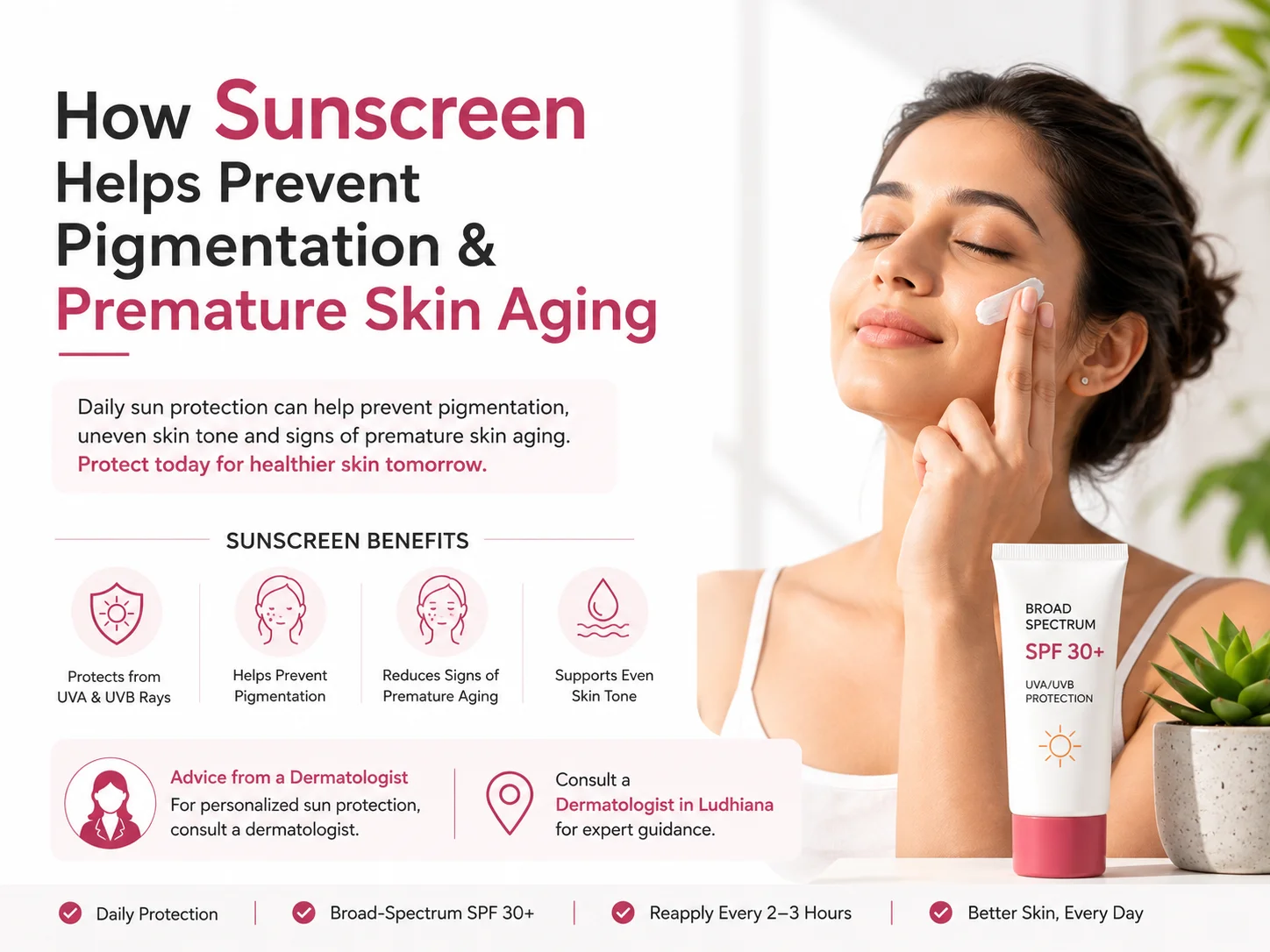
Sun exposure is a normal part of everyday life, but repeated exposure to ultraviolet radiation can affect the skin over time. Uneven skin tone, pigmentation, fine lines, tanning and other visible changes can develop gradually.
One of the simplest ways to reduce this exposure is regular use of sunscreen.
Sunscreen is not only useful when you are going to the beach or spending several hours outdoors. Daily sun protection can be particularly important for people who are dealing with pigmentation, acne marks or other concerns that become darker with sunlight.
If you already have pigmentation or are concerned about premature skin aging, a dermatologist in Ludhiana can help you understand the type of sun protection that suits your skin and daily routine.
What Does Sunscreen Actually Do?
Sunscreen helps protect the skin from ultraviolet radiation.
The two types of UV radiation most commonly discussed in relation to skin are:
- UVA: associated with photoaging and can contribute to pigmentation.
- UVB: strongly associated with sunburn and also contributes to long-term skin damage.
A broad-spectrum sunscreen is designed to provide protection against both UVA and UVB radiation.
Regular protection can help reduce the cumulative effects of sun exposure on the skin.
How Does Sun Exposure Cause Pigmentation?
When the skin is exposed to UV radiation, it can respond by increasing melanin production.
Melanin is the pigment responsible for much of our skin’s natural colour.
Increased melanin production can result in:
- Tanning
- Dark spots
- Uneven skin tone
- Worsening of existing pigmentation
- Increased visibility of some pigmentation conditions
For people who already have melasma or post-inflammatory hyperpigmentation, regular sun exposure may make the pigmentation more noticeable.
This is why sunscreen is an important part of pigmentation management.
Can Sunscreen Prevent Pigmentation Completely?
No sunscreen can guarantee that pigmentation will never develop.
Pigmentation can have several causes, including:
- Hormonal changes
- Acne and inflammation
- Genetics
- Certain medications
- Skin conditions
- Sun exposure
However, reducing UV exposure can help reduce one of the major external factors that can stimulate pigmentation.
For conditions such as melasma, sun protection can be an important part of both treatment and long-term maintenance.
How Does Sunscreen Help With Premature Skin Aging?
Repeated UV exposure contributes to photoaging.
Over time, this can affect the skin’s structure and appearance.
Signs associated with photoaging may include:
- Fine lines
- Wrinkles
- Uneven skin tone
- Dark spots
- Rougher skin texture
- Loss of elasticity
UV radiation can affect collagen and other structures within the skin.
Using sunscreen regularly can help reduce cumulative UV exposure and therefore support long-term skin health.
Is Sunscreen Necessary on Cloudy Days?
Yes.
Cloudy weather does not mean that UV exposure disappears.
Some UV radiation can still reach the skin even when the sky appears overcast.
If you spend time outdoors during the day, sunscreen can remain an important part of your sun-protection routine.
Do You Need Sunscreen Indoors?
The answer depends on your environment and daily activities.
If you spend most of the day indoors and have limited exposure to direct sunlight, your needs may differ from someone who regularly sits near windows or goes outdoors.
People undergoing treatment for pigmentation may be advised to maintain consistent sun protection because even regular daytime exposure can be relevant to their condition.
Your dermatologist can help you choose an approach based on your routine.
What SPF Should You Choose?
Sunscreens are labelled with an SPF value, which primarily indicates the level of protection against UVB-related sunburn.
For everyday use, many dermatologists recommend a broad-spectrum sunscreen with SPF 30 or higher.
However, SPF is not the only factor to consider.
Look for:
- Broad-spectrum protection
- Suitable SPF
- A formulation that suits your skin type
- Water resistance when needed
- Comfortable texture that encourages regular use
The best sunscreen is one that provides appropriate protection and that you can use consistently.
How Much Sunscreen Should You Apply?
Applying too little sunscreen can reduce the level of protection you actually receive.
For the face and neck, many people use approximately two finger-lengths of sunscreen as a practical application guide, although the amount needed can vary depending on the product and the area being covered.
Do not forget commonly missed areas such as:
- Ears
- Neck
- Hairline
- Upper chest when exposed
- Hands
If other exposed areas are not protected, they can still receive significant UV exposure.
When Should You Apply Sunscreen?
Apply sunscreen before going outdoors so that it has time to form an even protective layer.
If you are spending extended time outdoors, swimming or sweating heavily, reapplication may be needed.
Reapplication is particularly important when:
- You are outdoors for long periods
- You are sweating
- You are swimming
- You have wiped or washed the skin
Always follow the directions provided with your sunscreen.
Does Sunscreen Help During Pigmentation Treatment?
Yes, sun protection can be particularly important while managing pigmentation.
Treatments for pigmentation may help reduce excess pigment, but continued UV exposure can stimulate pigment production again.
Without adequate sun protection, it may become harder to maintain improvements.
This is why dermatologists often include sunscreen as part of a broader pigmentation treatment and maintenance plan.
What About Tinted Sunscreen?
Tinted sunscreens contain pigments that provide visible colour to the formulation.
Some tinted products contain iron oxides, which can provide additional protection against visible light.
This may be relevant for certain people with pigmentation concerns, particularly melasma.
However, the ideal sunscreen depends on your skin type, pigmentation pattern and lifestyle.
Sunscreen for Oily or Acne-Prone Skin
People with oily or acne-prone skin sometimes avoid sunscreen because they dislike heavy or greasy textures.
Instead of skipping sun protection, look for formulations designed for your skin type.
Depending on your skin, a lightweight, non-comedogenic formulation may be more comfortable.
If sunscreen repeatedly causes breakouts or irritation, a dermatologist can help you identify a more suitable formulation.
Common Sunscreen Mistakes
Even people who use sunscreen regularly may not receive adequate protection because of application habits.
Using Too Little
Applying a thin layer may not provide the protection indicated on the label.
Forgetting the Neck and Ears
The face is often protected while other exposed areas are overlooked.
Not Reapplying When Needed
Extended outdoor exposure, sweating and swimming can reduce protection.
Using an Old or Expired Product
Check the product’s expiry information and storage instructions.
Relying Only on Sunscreen
Sunscreen works best as part of a broader sun-protection strategy.
Hats, shade and appropriate clothing can also help reduce direct sun exposure.
Can Sunscreen Remove Existing Pigmentation?
Sunscreen does not directly remove established pigmentation.
Its main role is protection.
It can help prevent UV exposure from worsening existing pigmentation and can support the results of pigmentation treatment.
If you already have persistent dark patches, additional treatment may be needed depending on the cause.
When Should You See a Dermatologist for Pigmentation?
Consider professional evaluation if:
- Pigmentation keeps returning
- Dark patches are becoming more noticeable
- Acne is leaving persistent marks
- You are unsure whether the pigmentation is melasma
- Over-the-counter products are not helping
- You are considering laser or chemical peel treatment
- A pigmented spot changes in size, shape or appearance
A dermatologist can assess the pigmentation and determine whether it is related to sun exposure, melasma, acne, inflammation or another skin condition.
Frequently Asked Questions
Does sunscreen stop skin from getting darker?
Sunscreen can reduce UV exposure and therefore help limit UV-related tanning and pigmentation. It cannot completely prevent every change in skin colour.
Is SPF 30 enough for daily use?
A broad-spectrum SPF 30 or higher can be suitable for everyday use for many people. The right choice also depends on your skin, outdoor exposure and individual concerns.
Can sunscreen help melasma?
Yes. Consistent sun protection is an important part of managing melasma and reducing the chance of pigmentation becoming darker.
Should I apply sunscreen every day?
If your skin is exposed to daytime sunlight, regular sunscreen use can help reduce cumulative UV exposure.
Does sunscreen prevent wrinkles?
Regular sun protection can help reduce UV-related skin damage that contributes to premature skin aging, including fine lines and wrinkles.
Can I use the same sunscreen on my face and body?
Some products are formulated for both, while others are designed specifically for facial skin. Choose a formulation that suits the area and your skin type.
Conclusion
Sunscreen is more than a product used to prevent sunburn. Regular sun protection can help reduce UV-related pigmentation, uneven skin tone and premature skin aging.
For people dealing with melasma, acne marks or other pigmentation concerns, consistent sun protection can also play an important role in maintaining treatment results.
However, sunscreen cannot address every cause of pigmentation on its own. If dark patches are persistent, recurring or changing, identifying the underlying cause is an important next step.
Dr. Parwaaz Matharoo, Board-Certified Dermatologist and trusted dermatologist in Ludhiana, can assess your skin and recommend suitable sun protection and treatment options based on your individual pigmentation and skin concerns.
Book an Appointment
It’s easy and free!


